August 26th, 2026 | 07:25 CEST
Fuel for the Portfolio: Chevron, Zefiro Methane and Shell in Focus
Created and Published on Behalf of Zefiro Methane
The oil market no longer dominates the headlines on the business pages every day, and the war in the Persian Gulf has recently faded into the background. Interest rates and debt have now moved to the forefront. However, consumers in Europe and North America are clearly still feeling the effects of the conflict. Diesel prices are at record levels, even though the price of oil itself is not. All available refineries in Europe are operating at full capacity. The loss of refining capacity in the Middle East and Russia is likely to continue to affect markets for some time. Oil stocks, meanwhile, are in party mode. The S&P 500 Energy Index and the Energy Select Sector SPDR Fund are currently trading close to record levels. Today, we take a closer look at Chevron, Zefiro Methane and Shell.
time to read: 4 minutes | Author: Tarik Dede
ISIN: ZEFIRO METHANE CORP | CA98926D1069 | NEO: ZEFI , CHEVRON CORP. DL-_75 | US1667641005 , Shell PLC | GB00BP6MXD84
Table of contents:
Author

Tarik Dede
Even as a high school student in northern Germany, he developed a strong interest in the “Neuer Markt” and the dynamics of the equity markets. Small- and mid-cap companies were at the center of his focus from the very beginning. After completing his training as a certified bank clerk, he deepened his economic expertise through formal studies in economics as well as through various positions within Frankfurt’s financial sector. Today, he has been actively involved in the capital markets for more than 25 years, both professionally and as a private investor.
Tag cloud
Shares cloud
Chevron: Refining Margins Drive Profits
High oil prices are just one side of Chevron's quarterly results. On the other hand, the company is earning extremely well from refining margins, which have risen sharply over the course of the year. In the US, data from the Energy Information Administration (EIA) showed that US oil production remains at a record level of 13.8 million barrels per day. However, and this is important for refineries, inventories of refined products have fallen by 1.5 million barrels to their lowest level in more than a month. Although the average US diesel price of USD 5.45 per gallon is low by European standards—equivalent to just USD 1.44 per litre— Last year, a gallon cost US drivers significantly less, at USD 3.65 to 3.70.
Investors who have turned to oil stocks as a hedge against rising energy costs can count themselves lucky. Chevron, in any case, impressed with its quarterly results. Revenue for the 147-year-old California-based oil giant rose 50% to USD 67.20 billion. Bottom line, the company earned USD 12.1 billion, or USD 6.11 per share. That is the highest quarterly profit in 6 years. In the upstream oil production business, profits tripled. In the downstream segment, that is, the processing of diesel and other products, net income increased nearly sevenfold to USD 4.9 billion.
It is important for investors that Chevron continues to focus on buying back its own shares. In Q2, the company repurchased approximately USD 3 billion in shares. In addition, the dividend for the current quarter was set at USD 1.78 per share. In total, Chevron returned more than USD 6.5 billion to shareholders. Last but not least, liabilities were reduced by USD 8.4 billion.
Chevron's stock has gained more than a fifth since its June low. Those already invested should stay the course if they believe oil and diesel prices will remain high. New investors are waiting for a new entry opportunity following the rapid rally, which may arise during a correction.
Zefiro Methane Plugs the Holes Left Behind by Gas Companies
In the United States, it is possible to make money on both sides of the coin. And that is true in the oil business as well. So while Chevron benefits from strong demand, supply shortages, and high prices, other companies are looking to the sector's past and seeing an opportunity for revenue, profits, and growth.
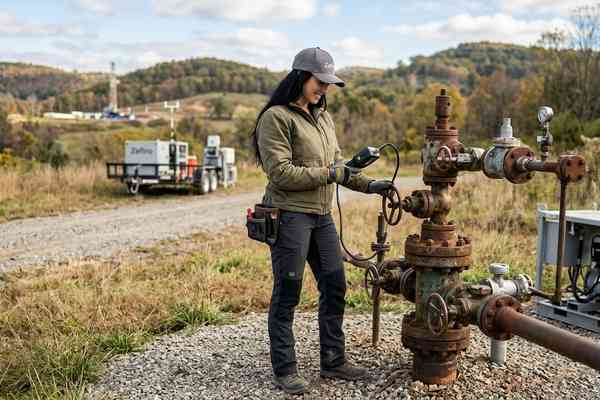
One such company is Zefiro Methane. The Canadians are tackling abandoned oil and gas wells with leaks from which climate-damaging gases like methane are still escaping today. This is particularly true in the eastern United States, along the Appalachian mountain range. These orphaned wells are a remnant of the country's industrialization. Sometimes the damage is caused by simple leaks, material defects, or outright shoddy workmanship. The issue is especially significant in the US. It is estimated that there are between 2 and 4 million abandoned oil and gas wells there. The federal government in Washington and state governments have already responded by allocating more than USD 4.5 billion to enable the proper plugging of these leaks. The size of this emerging market is estimated at more than USD 400 billion. Zefiro Methane does not just profit from solving the problem itself. Since this work has been proven to prevent emissions, the company generates CO₂ credits that can then be sold at a profit to large corporations such as Chevron. In 2025, Zefiro had plugged more than 200 orphaned wells.
In addition, Zefiro is focusing on expansion with strong partners. A few weeks ago, for example, the company announced a collaboration with the prominent Well Done Foundation. This nonprofit organization is known for its work plugging abandoned oil and gas wells. Zefiro secured a contract directly from the NGO to plug 10 wells.
Zefiro Methane is currently valued at just under EUR 40 million on the stock market. Following the sharp rise in its share price in 2025 and at the start of this year, a prolonged correction ensued. Signs of a bottom are now emerging. Risk-conscious investors can use this as an opportunity to enter the market.
Shell: Refineries Drive Margins
Shell is one of the few European leaders in the oil industry. However, unlike Chevron, about one-fifth of its business is affected by the closure of the Strait of Hormuz. Nevertheless, the British-Dutch conglomerate recently delivered impressive quarterly results. Three areas in particular stand out as key factors. The pricing and trading environment remains extremely favorable for Shell as well. The company was able to realize higher crude oil and natural gas prices and delivered strong results in the Trading & Optimization segment. Refining margins remain the most important asset at present. The facilities in Rotterdam are operating at their absolute capacity. As a result, the company doubled its adjusted earnings in this segment. Like Chevron, management used the strong cash flows to further reduce debt. Net debt fell from USD 52.6 billion in Q1 to USD 41.8 billion. As a result, the debt-to-equity ratio, known as gearing, fell to 19%. This puts the company in an excellent position with regard to this metric as well. With a gearing ratio of 19%, the company is also performing very well relative to the rest of the industry in the capital-intensive, cyclical oil and gas sector.
The second quarter filled the coffers. Revenue increased 45% to USD 94.7 billion, and adjusted profit rose 128% to USD 9.8 billion, both significant increases. Free cash flow nearly tripled to USD 17.5 billion. Shell announced a new USD 3 billion share buyback program for the coming quarter. Over the past 12 months, 44% of operating cash flow was returned to shareholders, which is within management's target range of 40–50%.
Shell should not only benefit from high prices in the second half of the year but also make further progress on cost savings. Shell's stock has gained more than 10% since its June low. We continue to expect high oil prices. As long as central banks cannot print oil, the high price level is unlikely to fall anytime soon.
Conflict of interest
Pursuant to §85 of the German Securities Trading Act (WpHG), we point out that Apaton Finance GmbH as well as partners, authors or employees of Apaton Finance GmbH (hereinafter referred to as "Relevant Persons") may hold shares or other financial instruments of the aforementioned companies in the future or may bet on rising or falling prices and thus a conflict of interest may arise in the future. The Relevant Persons reserve the right to buy or sell shares or other financial instruments of the Company at any time (hereinafter each a "Transaction"). Transactions may, under certain circumstances, influence the respective price of the shares or other financial instruments of the Company.
In addition, Apaton Finance GmbH is active in the context of the preparation and publication of the reporting in paid contractual relationships.
For this reason, there is a concrete conflict of interest.
The above information on existing conflicts of interest applies to all types and forms of publication used by Apaton Finance GmbH for publications on companies.
Risk notice
Apaton Finance GmbH offers editors, agencies and companies the opportunity to publish commentaries, interviews, summaries, news and the like on news.financial. These contents are exclusively for the information of the readers and do not represent any call to action or recommendations, neither explicitly nor implicitly they are to be understood as an assurance of possible price developments. The contents do not replace individual expert investment advice and do not constitute an offer to sell the discussed share(s) or other financial instruments, nor an invitation to buy or sell such.
The content is expressly not a financial analysis, but a journalistic or advertising text. Readers or users who make investment decisions or carry out transactions on the basis of the information provided here do so entirely at their own risk. No contractual relationship is established between Apaton Finance GmbH and its readers or the users of its offers, as our information only refers to the company and not to the investment decision of the reader or user.
The acquisition of financial instruments involves high risks, which can lead to the total loss of the invested capital. The information published by Apaton Finance GmbH and its authors is based on careful research. Nevertheless, no liability is assumed for financial losses or a content-related guarantee for the topicality, correctness, appropriateness and completeness of the content provided here. Please also note our Terms of use.