September 29th, 2026 | 07:35 CEST
Daimler Truck, Deutz and dynaCERT: Retrofit Technology as a Bridge Solution
Anyone who travels on German highways every morning can immediately see how important trucks are to our daily lives. Truck drivers keep the economy moving. Yet at first glance, it is not obvious that the logistics industry is caught in a conflict of priorities: calls for greater climate protection are running up against the high costs of the transport business. Zero-emission trucks are expensive, while the necessary infrastructure is still largely lacking, forcing transport companies to find pragmatic interim solutions. This opens up opportunities for agile companies and forward-thinking investors.
time to read: 4 minutes | Author: Nico Popp
ISIN: DYNACERT INC. | CA26780A1084 | TSX: DYA , OTCQB: DYFSF , DEUTZ AG O.N. | DE0006305006 , Daimler Truck Holding AG | DE000DTR0013
Table of contents:
Author

Nico Popp
At home in Southern Germany, the passionate stock exchange expert has been accompanying the capital markets for about twenty years. With a soft spot for smaller companies, he is constantly on the lookout for exciting investment stories.
Tag cloud
Shares cloud
Daimler Truck: Hydrogen Push Meets Efficient Internal Combustion Engines
One of the world's largest commercial vehicle manufacturers is increasingly focusing on hydrogen. Together with partners such as Volvo, Toyota and Bosch, Daimler Truck unveiled an alliance on September 15, 2026, at IAA Transportation. The goal is to make hydrogen trucks economically viable in Europe by 2030, with Germany serving as a model. By the end of the decade, the company will invest a mid-three-digit million amount in hydrogen trucks. Starting in late 2026, 100 next-generation fuel-cell trucks are set to enter customer service. Through the joint venture cellcentric, Daimler Truck also plans to begin large-scale production of fuel-cell systems in Weilheim, Swabia. Production is scheduled to begin around 2030. The final decision on construction depends on market developments and infrastructure.
At the same time, management is not ignoring the short-term challenges facing freight carriers. Because the transition takes time, the Group is stepping up efforts with its traditional fleet. Starting in April 2027, Mercedes-Benz Trucks will introduce the new Powerliner diesel engine generation in the Actros and Arocs models. It is expected to reduce fuel consumption by up to 4% compared to a comparable predecessor vehicle. Daimler Truck is also finding support in the capital markets: On September 10, 2026, RBC Capital Markets raised its price target from EUR 58 to 63 and reaffirmed its "Outperform" rating. Analysts attribute this primarily to the recovery of the North American truck market, the dividend and the ongoing share buybacks.
Deutz and the Bridge to Hydrogen Engines
Cologne-based engine manufacturer Deutz is taking a pragmatic approach to decarbonization. As early as 2021, the company unveiled a hydrogen internal combustion engine. It is based on a proven diesel engine but operates with spark plugs and an adapted air-fuel mixture. Initially, it will be used primarily in stationary systems and in the off-highway sector. According to the company, the engine withstands dust, dirt, and severe vibrations well and requires less pure hydrogen than a fuel cell. This keeps costs low and allows for the use of existing production facilities.
In the first half of 2026, Deutz's consolidated revenue climbed 10.7% to EUR 1.115 billion, while adjusted EBIT rose 43% to EUR 79.7 million. The growth was driven primarily by the energy and service businesses. The stock's revaluation is also fueling the planned acquisition of military vehicle manufacturer FFG. Warburg Research sets the price target at EUR 19; analysts' average targets are around EUR 15. However, the lack of hydrogen refuelling stations remains acute, even for hydrogen engines.
dynaCERT: Retrofit Solution for the Existing Fleet
The Canadian cleantech company dynaCERT is stepping right into this gap and tapping into significant market potential. According to the European Automobile Manufacturers' Association, approximately 6.2 million trucks are on the roads in the EU. Of these, over 96% run on conventional diesel. The average age of this existing fleet is about 14 years. With only 187 hydrogen refuelling stations across Europe, most of which are not suitable for heavy-duty commercial vehicles, freight carriers need an immediate solution to mitigate rising costs. With its HydraGEN™ system, dynaCERT offers a retrofit solution for this fleet. The compact system generates small amounts of hydrogen and oxygen directly on board from distilled water and feeds them into the engine's air intake system. According to the company, the hydrogen acts as a combustion accelerator, thereby reducing fuel consumption and emissions. The Federal Motor Transport Authority (KBA) granted the system a general operating permit as early as 2019—eliminating the need for individual approval.
dynaCERT: Global Expansion and New Revenue Streams
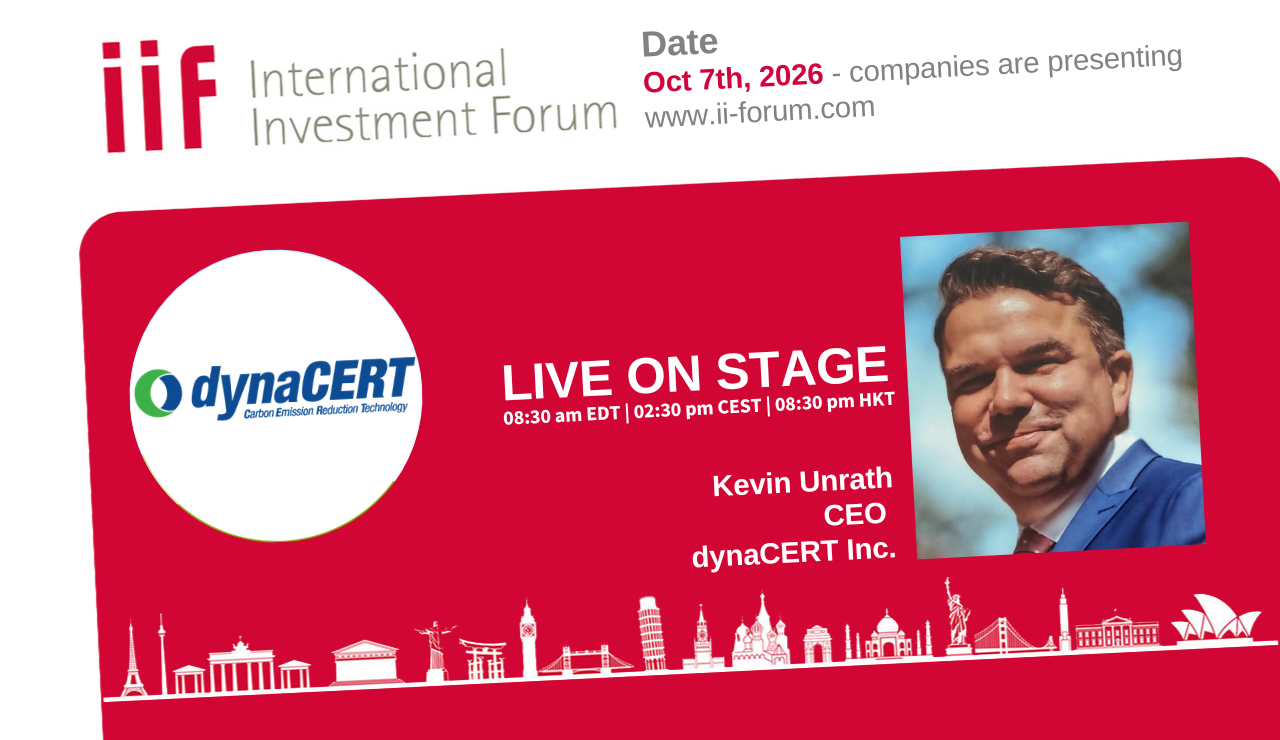
To roll out the solution, the management team, led by CEO Kevin Unrath and President Bernd Krüper, is launching a global sales campaign. At the 24-hour truck race in Le Mans, dynaCERT, together with its French distribution partner IPMD and the Dakar team NRS, presented rally trucks equipped with HydraGEN™. At the same time, the company aims to reduce its dependence on the road logistics market alone. dynaCERT was represented at Breakbulk Americas in Houston in September, and will follow with TOC Americas in Cartagena in October. Both trade shows target port and project logistics providers. In Vietnam, a pilot test led to an initial production order from a truck logistics provider. Pilot installations on fire trucks, forklifts and mobile cranes belonging to an oil and gas company are set to follow.
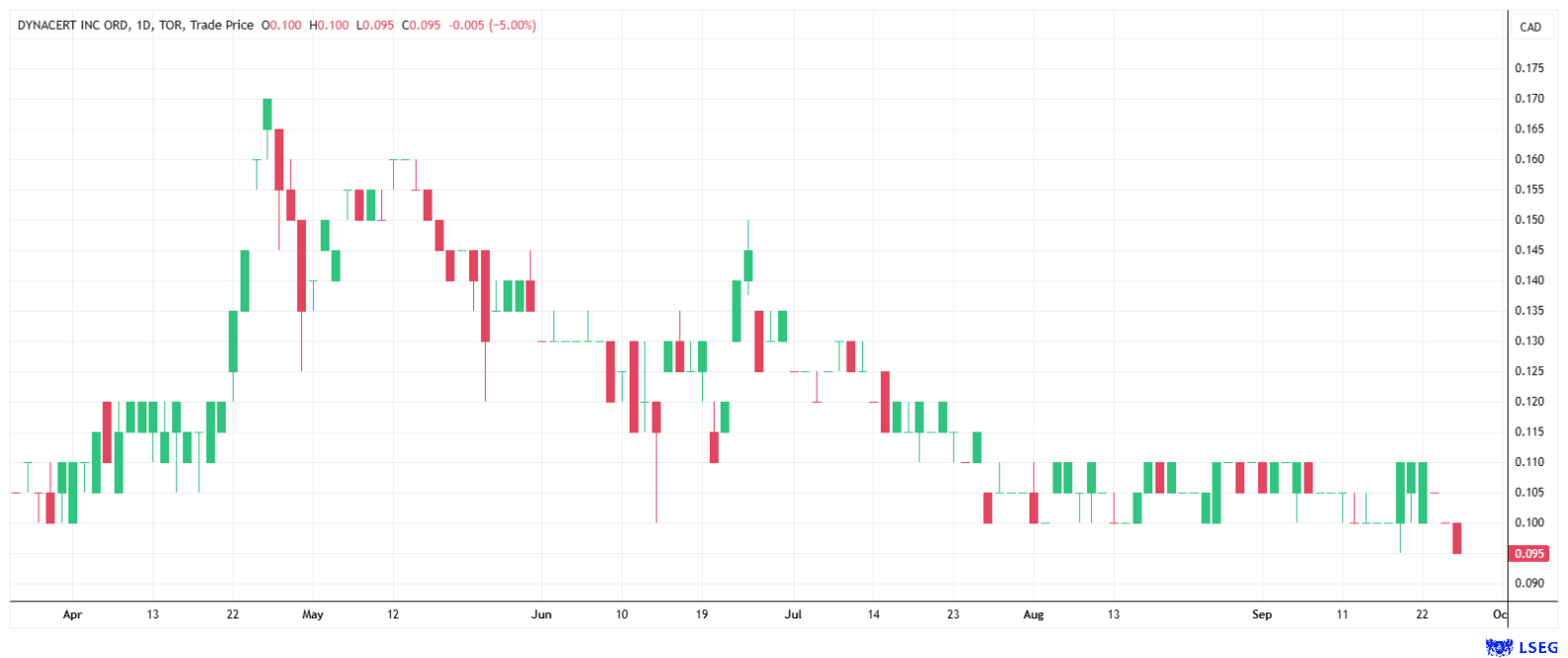
The real strategic lever, however, lies not in the hardware itself but in a software model. dynaCERT tracks the emissions savings via its in-house telematics platform, HydraLytica™, which the company claims is tamper-proof. Verra has already approved a methodology co-developed by dynaCERT in 2024. It is intended to enable the marketing of emission reductions as voluntary CO₂ credits in the future and to share the proceeds with fleet operators. At this stage, dynaCERT is not without risks, but the company appears to be at a pivotal point: Upcoming company announcements, such as those regarding additional production orders and the first issued CO₂ credits, could indicate the direction the company and its stock are headed.
Watch YouTube videoConflict of interest
Pursuant to §85 of the German Securities Trading Act (WpHG), we point out that Apaton Finance GmbH as well as partners, authors or employees of Apaton Finance GmbH (hereinafter referred to as "Relevant Persons") may hold shares or other financial instruments of the aforementioned companies in the future or may bet on rising or falling prices and thus a conflict of interest may arise in the future. The Relevant Persons reserve the right to buy or sell shares or other financial instruments of the Company at any time (hereinafter each a "Transaction"). Transactions may, under certain circumstances, influence the respective price of the shares or other financial instruments of the Company.
In addition, Apaton Finance GmbH is active in the context of the preparation and publication of the reporting in paid contractual relationships.
For this reason, there is a concrete conflict of interest.
The above information on existing conflicts of interest applies to all types and forms of publication used by Apaton Finance GmbH for publications on companies.
Risk notice
Apaton Finance GmbH offers editors, agencies and companies the opportunity to publish commentaries, interviews, summaries, news and the like on news.financial. These contents are exclusively for the information of the readers and do not represent any call to action or recommendations, neither explicitly nor implicitly they are to be understood as an assurance of possible price developments. The contents do not replace individual expert investment advice and do not constitute an offer to sell the discussed share(s) or other financial instruments, nor an invitation to buy or sell such.
The content is expressly not a financial analysis, but a journalistic or advertising text. Readers or users who make investment decisions or carry out transactions on the basis of the information provided here do so entirely at their own risk. No contractual relationship is established between Apaton Finance GmbH and its readers or the users of its offers, as our information only refers to the company and not to the investment decision of the reader or user.
The acquisition of financial instruments involves high risks, which can lead to the total loss of the invested capital. The information published by Apaton Finance GmbH and its authors is based on careful research. Nevertheless, no liability is assumed for financial losses or a content-related guarantee for the topicality, correctness, appropriateness and completeness of the content provided here. Please also note our Terms of use.