September 22nd, 2026 | 07:40 CEST
Climate Protection as a Source of Returns: Companies Like BP Face Demand, Halliburton Hesitates and Zefiro Steps In
Created and Published on Behalf of Zefiro Methane Corp.
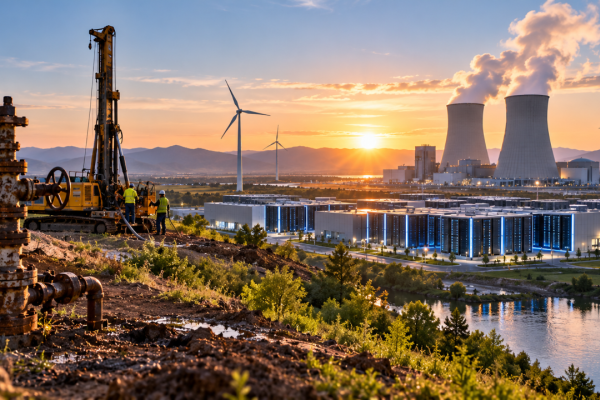
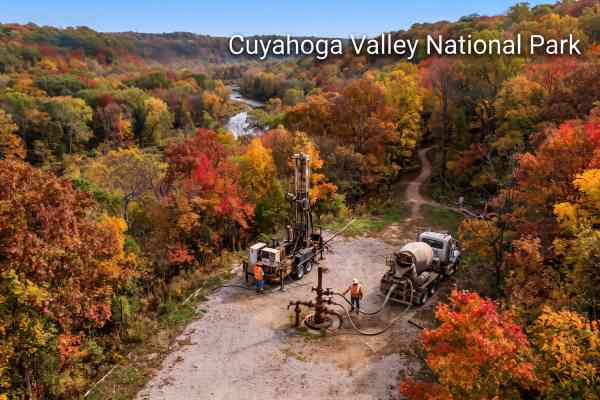
Forests, farms and abandoned industrial sites across the US may seem idyllic, but they often share a barely visible problem: an odourless gas is escaping from the ground that warms the climate many times more powerfully than carbon dioxide. Countless orphaned wells are left to rust away because the companies that once operated them have long since gone bankrupt. State authorities are now taking action, requiring those responsible to clean up these environmental liabilities. While companies struggle under these regulatory requirements, well-plugging specialist Zefiro Methane is turning environmental risks into tangible opportunities for investors.
time to read: 4 minutes | Author: Nico Popp
ISIN: ZEFIRO METHANE CORP | CA98926D1069 | Cboe: ZEFI , HALLIBURTON CO. DL 2_50 | US4062161017 , BP PLC DL-_25 | GB0007980591
Table of contents:
Author

Nico Popp
At home in Southern Germany, the passionate stock exchange expert has been accompanying the capital markets for about twenty years. With a soft spot for smaller companies, he is constantly on the lookout for exciting investment stories.
Tag cloud
Shares cloud
BP: More Oil and Gas, but Growing Environmental Liabilities
Following its 2025 strategic reset, BP is investing approximately USD 10 billion per year in its upstream business. However, the methane tax planned in the US for high-emission facilities (originally up to USD 1,500 per metric ton) was suspended in 2025 until 2034. Pressure on the industry currently stems primarily from decommissioning obligations, state regulations, and voluntary measurement standards such as OGMP 2.0. For years, energy companies passed ageing oilfields on to small operators to avoid costly backfilling. New regulations and regulatory enforcement powers are now bringing these legacy liabilities back onto the companies' balance sheets. At the same time, BP is committing to detailed emissions tracking through its own initiatives. To limit environmental risks and reputational damage, companies like BP are likely to increasingly rely on specialized partners.
Halliburton Avoids Small-Scale Onshore Operations
The well-known fossil fuel equipment supplier operates under entirely different principles: Halliburton focuses primarily on capital-intensive, large-scale contracts, while decentralized onshore drilling projects with unit costs of USD 100,000 to USD 200,000 are generally unprofitable for the company. An industry leader with global ambitions must keep its specialized equipment and teams operating at full capacity at all times. However, with tiny, scattered wells in remote areas, logistics costs soar relative to the contract value. This creates a significant supply gap in the North American interior. Major oilfield service providers are pulling out of these areas, leaving numerous problem wells without professional support.
Three-Pronged Strategy Drives Zefiro Methane
Zefiro Methane is stepping into precisely this gap with its vertically integrated business model. The gross margin rose to 32% on a twelve-month basis. In the first half of fiscal year 2025/26 (July–December 2025), Zefiro generated adjusted EBITDA of USD 3.8 million; after nine months, the figure stood at approximately USD 4.25 million. The company combines traditional remediation techniques with high-tech sensor technology and emissions trading. The core of its remediation fleet stems from the acquisition of Plants & Goodwin, which brings decades of experience in the Appalachian Basin. Zefiro cleans pipes, mechanically blocks gas flows, and permanently plugs old pipelines with special cement. However, the real revenue boost comes from a combination of revenue streams: government rehabilitation fees, high-margin monitoring measurements, and, in the future, converting avoided emissions into tradable credits.
Two proprietary tools give the company a decisive competitive advantage. The patent-pending "Wellhead Containment Tool" seals the wellhead against weather conditions. According to secondary sources on site, this reduces measurement time by approximately 40% and increases the gross margin in the measurement business from 25% to around 50%. For the remediation of porous pipes, the team uses the exclusively licensed REED technology, which hydraulically plugs leak paths in the drill pipe. According to management, this costs only a fraction of conventional remediation efforts, which can reach several hundred thousand US dollars. Demand is growing rapidly. Orders are increasingly coming from energy infrastructure projects, such as those providing power to data centres, where orphaned wells on the premises must be plugged.
Full Order Books Support Zefiro Methane – Rating Agency Sees Upside Potential
Operational expansion is built on a solid foundation of government contracts and acquisitions. Zefiro Methane secured a state-funded well-plugging contract worth USD 11.5 million in a state in the Great Lakes region, with work scheduled from November 2026 to June 2029. Of this amount, approximately USD 3 million is firmly budgeted through mid-2027. In Ohio, Plants & Goodwin is executing a three-year CMAR contract, from which management expects approximately USD 19.6 million in revenue through May 2029. Through the IIJA infrastructure law, the US government is providing USD 4.7 billion to plug orphan wells. To meet growing demand, Zefiro acquired Viking Well Service equipment for USD 4.30 million and expanded its operations to 13 US states. At the same time, the former JPMorgan management team led by CEO Catherine Flax is opening doors to the commodities markets. Through presale agreements with EDF Trading and Mercuria Energy America, Zefiro has sold its first emission credits from a plugged well in Oklahoma. The revised ACR methodology is expected to turn this into a recurring source of revenue.
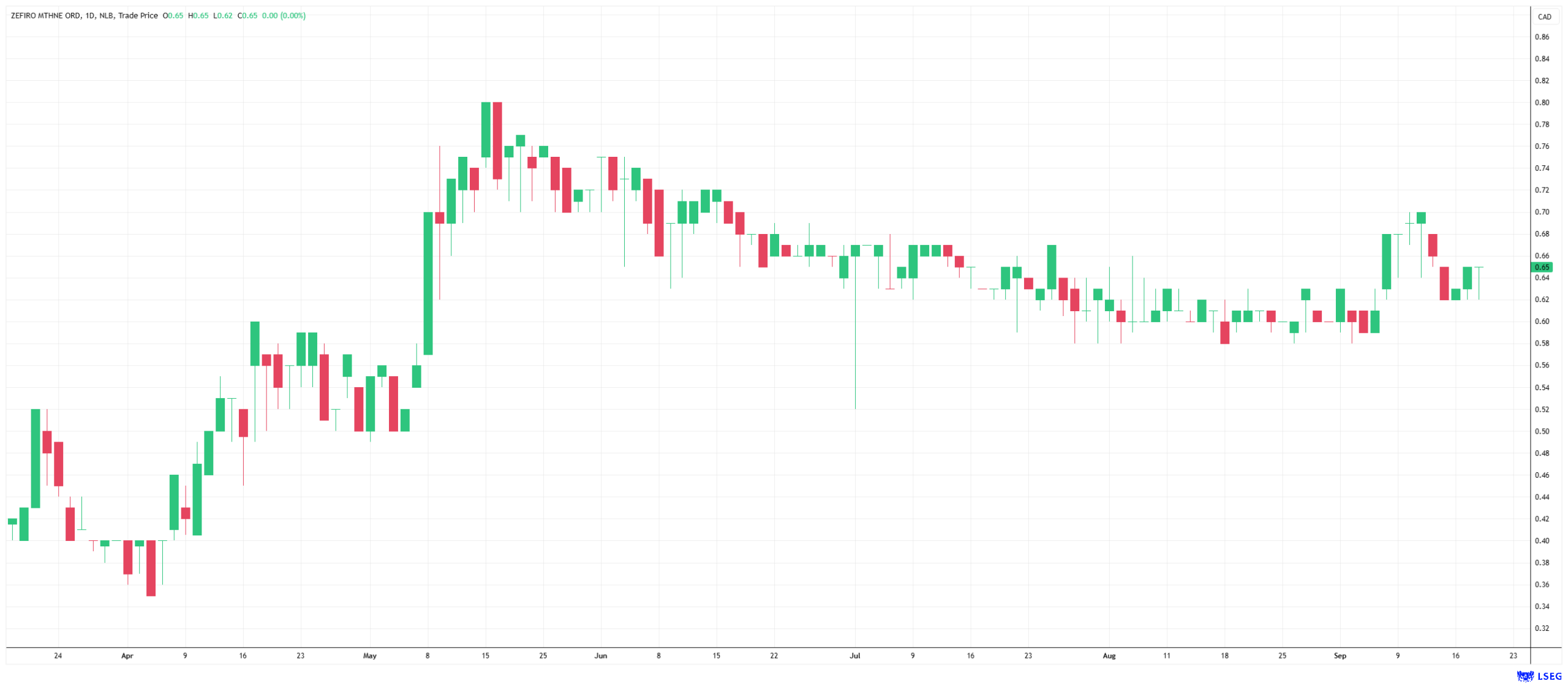
The Canadian investment bank ATB Cormark Capital Markets recently initiated coverage of the stock. Analyst Nicholas Boychuk rates Zefiro Methane "Outperform" and sets a price target of CAD 1.00. At the then-current price of CAD 0.68, this represents upside potential of approximately 47%. Other analysts are even more optimistic: GBC, for example, sees a price target of CAD 2.12. The ATB analysts emphasize that the market valuation of 5.4x EV/EBITDA and a free cash flow yield of 8.8% for calendar year 2027 do not reflect the company's dynamic cash flow profile. The primary value drivers are considered to be gains in market share in state-level programs, the consolidation of regional service providers, and growing operational leverage. ATB does not factor the sale of carbon credits into its price target and sees additional potential in this area. According to ATB Cormark Capital Markets, the main risks include integration challenges associated with acquisitions such as Viking Well Service, regulatory delays in the disbursement of federal funding, and fluctuations in emissions credit prices.
Watch YouTube videoConflict of interest
Pursuant to §85 of the German Securities Trading Act (WpHG), we point out that Apaton Finance GmbH as well as partners, authors or employees of Apaton Finance GmbH (hereinafter referred to as "Relevant Persons") may hold shares or other financial instruments of the aforementioned companies in the future or may bet on rising or falling prices and thus a conflict of interest may arise in the future. The Relevant Persons reserve the right to buy or sell shares or other financial instruments of the Company at any time (hereinafter each a "Transaction"). Transactions may, under certain circumstances, influence the respective price of the shares or other financial instruments of the Company.
In addition, Apaton Finance GmbH is active in the context of the preparation and publication of the reporting in paid contractual relationships.
For this reason, there is a concrete conflict of interest.
The above information on existing conflicts of interest applies to all types and forms of publication used by Apaton Finance GmbH for publications on companies.
Risk notice
Apaton Finance GmbH offers editors, agencies and companies the opportunity to publish commentaries, interviews, summaries, news and the like on news.financial. These contents are exclusively for the information of the readers and do not represent any call to action or recommendations, neither explicitly nor implicitly they are to be understood as an assurance of possible price developments. The contents do not replace individual expert investment advice and do not constitute an offer to sell the discussed share(s) or other financial instruments, nor an invitation to buy or sell such.
The content is expressly not a financial analysis, but a journalistic or advertising text. Readers or users who make investment decisions or carry out transactions on the basis of the information provided here do so entirely at their own risk. No contractual relationship is established between Apaton Finance GmbH and its readers or the users of its offers, as our information only refers to the company and not to the investment decision of the reader or user.
The acquisition of financial instruments involves high risks, which can lead to the total loss of the invested capital. The information published by Apaton Finance GmbH and its authors is based on careful research. Nevertheless, no liability is assumed for financial losses or a content-related guarantee for the topicality, correctness, appropriateness and completeness of the content provided here. Please also note our Terms of use.