August 4th, 2026 | 07:35 CEST
AI Needs Baseload Power: How SAP Monetizes AI, Standard Uranium Supports the Uranium Supply Chain, and Amazon Invests in Nuclear Power
Artificial intelligence has become firmly embedded in the global economy and is expected to remain a key driver of growth for years to come. While public attention is focused on AI agents, the latest ChatGPT models, and increasingly powerful algorithms, a far more fundamental bottleneck is emerging: energy. Massive data centers are being built to power the next generation of AI applications, and they require enormous amounts of reliable, around-the-clock electricity. As a result, baseload power is becoming increasingly important. In this report, we examine SAP, the established software leader generating recurring revenue through its cloud services and AI offerings. We also take a closer look at Standard Uranium, an emerging exploration company that could play a role in strengthening the uranium supply chain. Finally, we turn to Amazon, which is not only investing heavily in the physical infrastructure behind AI but is also planning to power parts of its operations with small modular reactors (SMRs).
time to read: 5 minutes | Author: Armin Schulz
ISIN: STANDARD URANIUM LTD. | CA85422Q8487 | TSXV: STND , OTCQB: STTDF , SAP SE O.N. | DE0007164600 , AMAZON.COM INC. DL-_01 | US0231351067
Table of contents:
Author

Armin Schulz
Born in Mönchengladbach, he studied business administration in the Netherlands. In the course of his studies he came into contact with the stock exchange for the first time. He has more than 25 years of experience in stock market business.
Tag cloud
Shares cloud
SAP: Strong Quarterly Results
SAP has undergone a transformation. With its cloud strategy, which features deep technological expertise, the company goes far beyond standard enterprise software approaches. The SAP Business Data Cloud is a data platform that works with both proprietary and external data sources, and that is a decisive competitive advantage. The acquisitions of Dremio and Prior Labs are expanding this architecture and enabling specialized tabular AI processes. For investors, this means the company has created a moat, as its proprietary business data, semantic data layer, and other elements are not only a technological barrier that is difficult to replicate—they also make it hard for customers to switch systems.
The second-quarter figures clearly demonstrate this. The cloud order backlog reached a record high of EUR 22.93 billion, marking a 26% increase. Cloud revenue climbed 24% to EUR 6.28 billion, and the Cloud ERP Suite reported 27% growth. Consolidated revenue totaled EUR 9.88 billion. Operating profit grew by 7% to EUR 2.74 billion. AI monetization is based on a usage-based model that customers can utilize via Joule and AI agents, paying for it with AI Units. In the third quarter, SAP plans to introduce around 50 new AI assistants and 200 AI agents.
Operational performance is thus solid. The cloud business is growing at a double-digit rate, and the strong order backlog, along with the new strategic focus on AI-powered enterprise software, appears attractive in the long term. The approach also appears to be well-received by customers. While the short-term costs associated with the acquisitions will put pressure on margins in the second half of the year, investments in the future are expected to pay off in the long run. What matters now is that the integration of the acquired companies is successful and that synergies can be realized. The recent insider purchases by the CEO and CFO are sending positive signals to investors, at the very least. The share is currently trading at around EUR 165.26.
Standard Uranium: Strong Drill Results
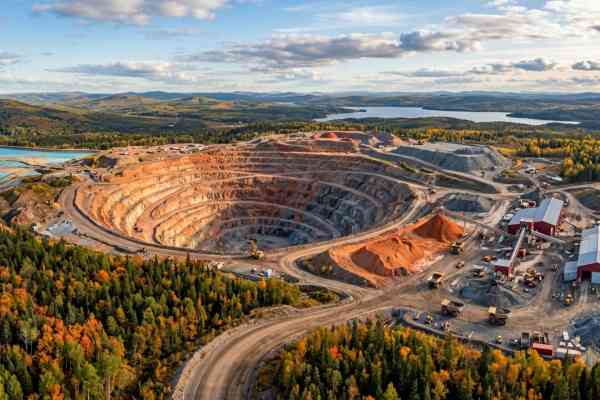
Standard Uranium has an unconventional approach to business development. Instead of exploring projects exclusively on its own, the company seeks partnerships to ensure faster progress. This so-called "project generator" approach covers a total of 88,000 ha of properties in the Athabasca Basin. This includes the flagship Davidson River project in the southwest. While the partners fund the exploration, Standard Uranium always acts as the project manager for all exploration activities and, upon success, receives a 25% stake in the project as well as a share of the net proceeds. This covers general administrative costs, and capital expenditures are reserved for the core project. As a result, shareholders experience significantly less dilution, and one of the world's highest-grade uranium regions can be explored more quickly.
The first drilling campaign at the Corvo Project has already yielded solid results. A total of 10 exploration holes were to be drilled on the 12,500-hectare property in the eastern part of the Athabasca Basin. These are the first such drillings in over 40 years. The company was able to identify anomalous uranium in 9 out of 10 drill holes—one was abandoned due to ground conditions. Six drill holes even showed significant concentrations ranging from over 100 to 350 ppm. Particularly revealing is the uranium-thorium ratio of over 2:1, which indicates active hydrothermal fluid movement. In addition, the company intends to keep the focus on the Manhattan Zone, where over 8% uranium has already been measured at surface. The company is already planning a second drilling program.
These results come amid a favourable market environment, as nuclear power is making a comeback, driven primarily by the energy demands of AI data centers, electric mobility, and other factors. Demand could multiply by 2050, while there is a significant supply gap for uranium. The southwestern Athabasca Basin, with its high-grade deposits, therefore remains a key strategic location. The geological conditions are excellent. However, the market has not yet fully priced this in, as Standard Uranium still lags behind NexGen Energy and Cameco, both of which are also active in the Athabasca Basin. Both companies have already reached a valuation in the billions, while Standard Uranium, at a current share price of CAD 0.085, is valued at only about CAD 12 million.
Amazon: Three-Pronged Approach for the AI Era
Amazon's second-quarter results confirm the company's AI strategy. For a long time, the high spending on data centers was viewed critically, but AWS, with revenue of USD 42.2 billion, representing 37% growth, proved that the investments are slowly but surely paying off. The operating margin stood at 39.4%, the highest level in years. The adjusted margin after one-time items of approximately 52% shows that every additional dollar in revenue generates more than half of the operating profit. The order backlog is growing at triple-digit rates and has now reached USD 496 billion, covering capacity utilization for the coming years.
The in-house developed chips Trainium and Graviton have surpassed a USD 25 billion run rate and are also growing at triple-digit rates. To secure AI capacity at Amazon, you must commit to at least five years, and Amazon simultaneously benefits from falling unit costs due to its in-house silicon development, thereby securing a competitive position that is difficult to replicate. The increase in the CapEx forecast to USD 220 billion is primarily due to higher storage costs. It has nothing to do with additional capacity expansions. Capacity for 2027 has largely been sold out, and the first bookings for 2028 are already in.
To ensure it has a constant supply of carbon-free energy for its data centers, Amazon plans to build twelve small modular reactors (SMRs) in Washington. The total capacity is expected to reach up to 960 megawatts. Construction is scheduled to begin by the end of 2029, with operations set to commence in the early 2030s. In doing so, the company has positioned itself early in the race for a reliable power supply. At the same time, it is pursuing projects in Virginia and partnerships with X-energy and Talen Energy to expand its energy infrastructure, which in turn is intended to secure cloud growth for the next decade. This reduces dependence on the volatile energy market. The share is currently trading at around USD 271.58.
Artificial intelligence cannot function without a secure baseload energy supply. SAP has created a moat with its cloud and AI strategy that generates recurring revenue. Standard Uranium aims to become a key supplier for the nuclear power supply chain in the future and is located in the immediate vicinity of industry heavyweights. Amazon is building the physical infrastructure for AI use in the coming years with billions in investments in data centers and SMRs.
Conflict of interest
Pursuant to §85 of the German Securities Trading Act (WpHG), we point out that Apaton Finance GmbH as well as partners, authors or employees of Apaton Finance GmbH (hereinafter referred to as "Relevant Persons") currently hold or hold shares or other financial instruments of the aforementioned companies and speculate on their price developments. In this respect, they intend to sell or acquire shares or other financial instruments of the companies (hereinafter each referred to as a "Transaction"). Transactions may thereby influence the respective price of the shares or other financial instruments of the Company.
In this respect, there is a concrete conflict of interest in the reporting on the companies.
In addition, Apaton Finance GmbH is active in the context of the preparation and publication of the reporting in paid contractual relationships.
For this reason, there is also a concrete conflict of interest.
The above information on existing conflicts of interest applies to all types and forms of publication used by Apaton Finance GmbH for publications on companies.
Risk notice
Apaton Finance GmbH offers editors, agencies and companies the opportunity to publish commentaries, interviews, summaries, news and the like on news.financial. These contents are exclusively for the information of the readers and do not represent any call to action or recommendations, neither explicitly nor implicitly they are to be understood as an assurance of possible price developments. The contents do not replace individual expert investment advice and do not constitute an offer to sell the discussed share(s) or other financial instruments, nor an invitation to buy or sell such.
The content is expressly not a financial analysis, but a journalistic or advertising text. Readers or users who make investment decisions or carry out transactions on the basis of the information provided here do so entirely at their own risk. No contractual relationship is established between Apaton Finance GmbH and its readers or the users of its offers, as our information only refers to the company and not to the investment decision of the reader or user.
The acquisition of financial instruments involves high risks, which can lead to the total loss of the invested capital. The information published by Apaton Finance GmbH and its authors is based on careful research. Nevertheless, no liability is assumed for financial losses or a content-related guarantee for the topicality, correctness, appropriateness and completeness of the content provided here. Please also note our Terms of use.