September 18th, 2026 | 09:40 CEST
A Firework Display of Returns: A Closer Look at the Dividend Standouts RTL Group, Mutares and RE Royalties
In volatile markets and amid economic uncertainty, dividends can be a rock in the storm. Yet investors do not necessarily have to rely on sluggish blue-chip stocks. Three companies from the small- and mid-cap segment are delivering a veritable return bonanza. The journey takes us from an established media group and an SDAX-listed turnaround specialist to a Canadian pioneer in renewable energy: At RTL, the acquisition of Sky Deutschland and a now-profitable streaming business are providing fresh momentum. Mutares selectively acquires loss-making divisions from major corporations and transforms them into reliable sources of returns for shareholders. And RE Royalties, with a dividend yield of more than 10%, outshines both—while a discreet sale process is taking place behind the scenes that could provide investors with an additional substantial takeover premium.
time to read: 6 minutes | Author: Jens Castner
ISIN: RE ROYALTIES LTD | CA75527Q1081 | TSXV: RE , OTCQX: RROYF , MUTARES KGAA NA O.N. | DE000A2NB650 , RTL GROUP | LU0061462528
Table of contents:
Author
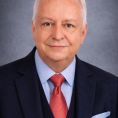
Jens Castner
The Nuremberg native brings over three decades of capital markets experience, backed by a career shaped by deep market insight and a genuine passion for investing. His journey began in 1994 through an investment club among colleagues – a formative experience that sparked a lifelong dedication to identifying compelling investment opportunities.
Following senior editorial roles at Nürnberger Nachrichten, €uro am Sonntag, and €uro, he went on to serve as Editor-in-Chief of the renowned investor magazine Börse Online from 2014, where he played a key role in shaping high-quality financial journalism for a broad investor audience.
Tag cloud
Shares cloud
RTL Group: The Media Giant Reinvents Itself – and Unlocks New Growth
RTL shareholders enjoyed a veritable windfall this spring: The Luxembourg-based media group paid out a whopping EUR 5.50 per share—a massive double-digit dividend yield made possible largely by the successful billion-euro sale of RTL Nederland. But that is not the end of the story. Following the annual shareholders' meeting at the end of April next year, analysts expect an average dividend of more than EUR 2.30—without any special distribution. At the current price of EUR 32.20, this translates to a yield of 7.1%. Even after deducting the 15% Luxembourg withholding tax, more than 6% remains. If you also factor in the 25% German flat-rate withholding tax, the net yield comes in at just under 4.6%.
The MDAX-listed media group is far more than a short-term special story, as its latest financial results and a groundbreaking major acquisition show. A milestone was the now-completed acquisition of Sky Deutschland. The acquisition brings together two of the best-known media brands in the German-speaking world and sends the number of paying subscribers soaring to around 12.3 million. The combination of exclusive live sports rights with RTL's entertainment and news expertise creates a true entertainment giant. RTL Group CEO Clément Schwebig emphasizes the strategic importance of the move and explains that Sky and RTL will be gradually merged, with annual synergies of around EUR 250 million expected to be realized within three years. The goal is to "bring together the best talent, content, and processes from both companies".
The half-year results show that the transformation from traditional, linear television to the digital business is in full swing. Revenue rose by 3.9% to EUR 2.89 billion, while adjusted operating profit soared by nearly 50% to EUR 239 million. The key point: The streaming business is now profitable. Due to the Sky integration, management has significantly raised its full-year revenue forecast to up to EUR 7.2 billion. Consequently, CEO Schwebig speaks of strong business performance. The high-margin digital and streaming business is increasingly offsetting fluctuations in the traditional advertising market. Management has therefore reaffirmed its intention to consistently pay out at least 80% of adjusted net income as dividends.
Mutares: The Turnaround Artists Take It Up a Notch
While the RTL Group is already shining with an exceptionally high return on investment, the investment firm Mutares takes it up a notch. The Munich-based private-equity firm proves that maximum returns and highly sophisticated risk management need not be mutually exclusive. The company focuses on so-called "special situations"—a business model that founder and CEO Robin Laik recently summed up in no uncertain terms at an investor event in Heidelberg: They buy loss-making companies, even actively approach corporate groups, and inquire about problem divisions. What others see as an incalculable risk is, for Mutares, a system with three revenue streams. Large corporations are happy to outsource unprofitable divisions to the SDAX-listed company, as it operates extremely efficiently as a turnaround specialist. "We can carry out the turnaround more cost-effectively than if the corporations were to do it themselves", explains Laik. Mutares earns revenue immediately through consulting services; once the business has been turned around, the company shares in the dividends and later in the exit proceeds.
Concrete real-world examples demonstrate that this approach works. A current standout in the portfolio is the Portuguese electrical engineering and mechanical engineering specialist Efacec. The operating business had come close to a standstill after the shareholders had effectively stripped the company of its assets. To save this systemically important company from collapse, it was nationalized and ultimately transferred to Mutares—including financial support for the turnaround. Today, Efacec is on the verge of a potential billion-euro exit or initial public offering. Mutares demonstrated what a perfect exit looks like in reality in October 2024 with the IPO of specialty engine manufacturer Steyr Motors.
These operational successes are reflected in the numbers. The holding company closed the past fiscal year with a net profit of EUR 130 million. For the current year, management is setting the bar significantly higher: a net profit of between EUR 160 and 200 million is expected, with the lower end of the range already a sure thing, according to Laik. *This profit momentum serves as a kind of life insurance for the stock's most important promise: the fixed minimum dividend of EUR 2.00 per share. * At the current price of EUR 25.95, this translates to a yield of 7.7% (just under 5.8% after withholding tax)—and it does not have to stop there. Analysts expect next year's dividend, paid after the annual shareholders' meeting in mid-2028, to rise to EUR 2.25.
RE Royalties: Green Dividend Tops 10% and Leaves the Rest Behind
If you thought Mutares had already reached the top end of the dividend spectrum, RE Royalties may prove otherwise. With a double-digit dividend yield, the Canadian company even outperforms the two European dividend payers. The company previously paid CAD 0.01 per quarter, but management has since switched to annual distributions. Assuming the annual payout remains unchanged at CAD 0.04, the current share price of just CAD 0.38 (EUR 0.23) implies a dividend yield of 10.5%. The 25% withholding tax is even easier to stomach given that 15% can be credited against German withholding tax. This leaves an effective yield of almost 9.5%, or around 7.1% net after German withholding tax.
What may seem paradoxical at first glance is, upon closer inspection, a legitimate desire that is in the shareholders' best interest: Management would like to see a significantly lower dividend yield! Not because they want to cut the dividend, but because all efforts are focused on driving up the share price of this largely overlooked small-cap stock. CEO and co-founder Bernard Tan makes no secret of this intention. Radical steps have already been taken; the consulting firm PricewaterhouseCoopers (PwC) has been commissioned to examine all strategic options—including the complete sale of the entire company. The process is in full swing. A special committee of the board of directors, established specifically for this purpose, is sounding out the market. For dividend investors, this would be a bitter loss, but for potential buyers, RE Royalties could be a gold mine. The unique business model is called "Green Royalty Financing" and is inspired by the commodities sector. It involves growth financing for other companies, except that the money goes not to mining companies but to operators of solar, wind, and hydroelectric power plants. In return, the Canadians receive a fixed share of revenue—reliable, green licensing fees, known as royalties.
So the company does not build its own power plants but acts as a specialized financier. Since its founding, the company has invested approximately CAD 83 million in 27 transactions. This secures RE Royalties recurring revenue from over 135 clean energy projects, more than 80% of which are located in North America. While project developers are struggling under rising construction costs, RE Royalties simply collects a contractually guaranteed percentage of revenue from electricity sales—effectively inflation-protected. It is likely only a matter of time before this steady cash flow attracts the interest of big players. After all, the established, diversified platform would be a perfect shortcut for major investors or traditional energy companies looking to "green" their portfolios quickly, without the protracted risks of project development. A financially strong new owner could also scale the platform rapidly by providing significantly more capital for new contracts.
This presents investors with a rare double opportunity: on the one hand, a generous dividend directly fueled by clean energy revenues; on the other, the prospect of a hefty takeover premium. Since the core business is performing solidly and management is convinced the market is underestimating the company's true value, "natural share price increases" are a third conceivable scenario—and certainly not the worst.
Conflict of interest
Pursuant to §85 of the German Securities Trading Act (WpHG), we point out that Apaton Finance GmbH as well as partners, authors or employees of Apaton Finance GmbH (hereinafter referred to as "Relevant Persons") may hold shares or other financial instruments of the aforementioned companies in the future or may bet on rising or falling prices and thus a conflict of interest may arise in the future. The Relevant Persons reserve the right to buy or sell shares or other financial instruments of the Company at any time (hereinafter each a "Transaction"). Transactions may, under certain circumstances, influence the respective price of the shares or other financial instruments of the Company.
In addition, Apaton Finance GmbH is active in the context of the preparation and publication of the reporting in paid contractual relationships.
For this reason, there is a concrete conflict of interest.
The above information on existing conflicts of interest applies to all types and forms of publication used by Apaton Finance GmbH for publications on companies.
Risk notice
Apaton Finance GmbH offers editors, agencies and companies the opportunity to publish commentaries, interviews, summaries, news and the like on news.financial. These contents are exclusively for the information of the readers and do not represent any call to action or recommendations, neither explicitly nor implicitly they are to be understood as an assurance of possible price developments. The contents do not replace individual expert investment advice and do not constitute an offer to sell the discussed share(s) or other financial instruments, nor an invitation to buy or sell such.
The content is expressly not a financial analysis, but a journalistic or advertising text. Readers or users who make investment decisions or carry out transactions on the basis of the information provided here do so entirely at their own risk. No contractual relationship is established between Apaton Finance GmbH and its readers or the users of its offers, as our information only refers to the company and not to the investment decision of the reader or user.
The acquisition of financial instruments involves high risks, which can lead to the total loss of the invested capital. The information published by Apaton Finance GmbH and its authors is based on careful research. Nevertheless, no liability is assumed for financial losses or a content-related guarantee for the topicality, correctness, appropriateness and completeness of the content provided here. Please also note our Terms of use.