June 26th, 2026 | 07:05 CEST
Zefiro Methane, 2G Energy, and Siemens Energy: A Closer Look at Three Exciting Energy Stocks with Different Risk Profiles
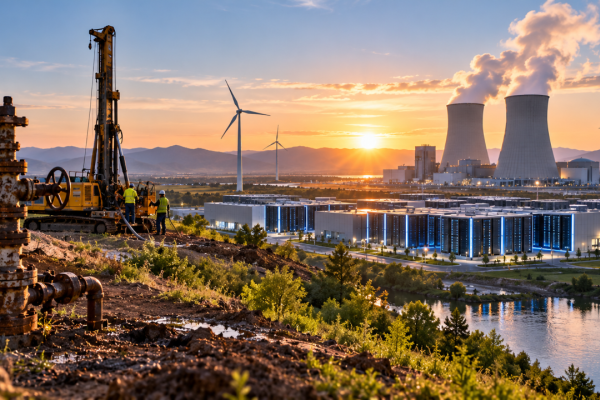
The energy transition is often discussed in terms of wind turbines, solar panels, and hydrogen. But behind the scenes, an equally exciting market is emerging: abandoned oil and gas wells must be plugged, methane emissions reduced, power grids expanded, and data centers reliably supplied with power. Zefiro Methane, 2G Energy, and Siemens Energy are benefiting from this trend. Today, we take a look at three energy stocks with very different risk profiles.
time to read: 9 minutes | Author: Lars Winter
ISIN: ZEFIRO METHANE CORP | CA98926D1069 | NEO: ZEFI , SIEMENS ENERGY AG NA O.N. | DE000ENER6Y0 , 2G ENERGY AG | DE000A0HL8N9
Table of contents:
Author

Lars Winter
A native of North Hesse, he has over 25 years of experience in financial journalism and active portfolio management and is regarded as a proven expert on German small-cap stocks and special situations.
After studying law at the University of Göttingen with a focus on banking and capital markets law, he began his career in Frankfurt's financial scene at the turn of the millennium. As a stock market and business journalist, the passionate amateur golfer wrote for leading investment newsletters, financial newspapers, and business magazines, including PLATOW Börse, Capital Depesche, BÖRSE ONLINE, Capital, and the Financial Times Deutschland.
Tag cloud
Shares cloud
Zefiro Methane: A Specialist with Doubling Potential
Zefiro Methane offers an exciting opportunity for speculative investors. The Canadian specialist is tackling a problem in North America that has flown under the radar for decades. In the US, there are millions of abandoned and orphaned oil and gas wells. Many of them are poorly documented and leaking. Some of the former operators have long since dissolved, gone bankrupt, or are virtually impossible to hold legally accountable. What remains are wells from which methane is escaping. This is a real issue for the climate, as methane is significantly more harmful than CO₂ in the short term. For specialized service providers like Zefiro, this creates a market worth billions.
At first glance, the business model seems down-to-earth. Zefiro plugs abandoned wells, remediates sites, measures methane emissions, and provides environmental services to government agencies, states, and companies. The real appeal, however, lies in the company's combination of traditional oilfield services with modern emissions measurement and, in the future, CO₂ credits. The dirty legacy of the fossil fuel industry could thus be transformed into a scalable environmental business. It is precisely this combination that makes the stock so interesting.
Operations Are Booming
Operationally, the company is now gaining noticeable momentum. In the first nine months of the current 2025/26 fiscal year (as of the end of June), Zefiro generated revenue of approximately USD 33 million. This represents growth of about 36% compared to the previous year. In the third quarter alone, revenue rose by more than 58% to approximately USD 11 million. Profitability is also improving steadily. Adjusted EBITDA reached approximately USD 4.25 million. As a result, this small-cap story has suddenly become more than just a nice ESG fantasy. Zefiro is demonstrating that money can indeed be made by plugging orphaned wells and monitoring methane emissions. The company expects revenue of more than USD 40 million for the full year. For a small-cap company of this size, that is a significant leap.
New Contracts
Zefiro recently secured four new clients in the energy sector, including three publicly traded companies. The contracts cover the decommissioning of production, storage, injection, and salt wells in Ohio and Indiana. At the same time, the company launched a major contract in Ohio, running through May 2029 with a potential volume of approximately USD 19.6 million. In addition, Zefiro secured three further projects to close abandoned wells with a total value of approximately USD 2.4 million, which are funded by the US infrastructure program. In early May, Zefiro Methane announced the acquisition of facilities and equipment from Viking Well Service for USD 4.3 million. This expands the fleet by five drilling rigs and additional heavy equipment. Above all, however, the company is gaining access to new key states such as Illinois and Michigan. Management expects the acquisition to generate additional annual revenue of over USD 10 million.
Even more exciting, however, is the high-margin monitoring business. As part of a major contract in West Virginia, Zefiro Methane recently tested 849 wells for methane emissions. The margins for these services are roughly twice those for traditional well plugging. In addition, the company uses its own patent-pending measurement technology and is now generating its first revenue from so-called REED technology for sealing leaky well casings.
Additional Revenue from Emissions Trading
An additional aspect of the growth story is that Zefiro Methane not only earns revenue from plugging wells but also, in the future, from trading CO₂ allowances and emission credits. Several of the company's top executives come from the emissions trading divisions of major US banks such as JPMorgan and have many years of experience and the relevant expertise in this field. The combination of environmental technology, infrastructure, and emissions trading makes Zefiro Methane's business model highly scalable.
A video presentation featuring Zefiro Methane CEO Catherine Flax can be found here:
Potential for a Twofold Increase in Share Price
However, that does not mean the stock is a sure thing. At this stage, Zefiro remains highly speculative, and the stock is volatile. The company continues to depend on financing for its operations, and part of its upside potential hinges on regulatory support, subsidy programs, and the development of the emissions allowance market. On the other hand, the problem of old wellbores does not disappear just because it is not politically fashionable right now. The wells remain. So does the methane. Someone has to clean them up. That is exactly why Zefiro remains a very exciting stock in the energy services sector. If the company succeeds in translating its recent momentum into sustainable growth and stable profits, the market could completely reevaluate the stock. Even though it has already gained more than 100% over the past year, it could very well double in value again in the coming months.
2G Energy: The Data Center Powerhouse from Heek
Significantly more solid, but equally promising, is 2G Energy. The Heek-based specialist builds combined heat and power plants and decentralized energy systems that can be fueled by natural gas, biogas, hydrogen, or other gases. For a long time, 2G was primarily seen as a beneficiary of biogas, combined heat and power, and decentralized energy supply. Now, the story is taking a new turn with data centers. The electricity demand driven by artificial intelligence is one of the most important new investment trends. New data centers are springing up everywhere, but the power grids can barely keep up. This is exactly where decentralized power supply is suddenly becoming attractive again. When grid connections are scarce or take years to secure, on-site containerized power plants can be a solution. 2G has received a major order from North America for precisely this purpose. The subsidiary is set to equip data centers with containerized power plants. Deliveries are scheduled to begin in the second half of 2026.
For 2G, this is more than just a single order. It is a strategic door-opener. Management now expects to reach the upper end of its previous revenue forecast of EUR 450 to 490 million in 2026, as well as an EBIT margin between 9.5% and 10.5%. For 2027, the company is even projecting revenue of EUR 570 to 620 million and an EBIT margin of over 11%. That would represent growth of around 20%. For a German small-cap stock with industrial substance, that is a significant figure.
Of course, there is a catch here as well. The higher proportion of machine deliveries could weigh on the margin in the short term. In addition, 2G has recently had to contend with one-time costs associated with the ERP conversion, which primarily slowed down the service business in Germany. But that is precisely where the opportunity lies. Once the service business is back on track and the data center business ramps up, profitability could pick up significantly again, starting in 2027.
New Orders on the Horizon
On the stock market, 2G is no longer a hidden gem. The stock has performed well. But from an operational perspective, the story has gained new momentum. If the data center market does indeed become an additional growth driver, 2G could enter a new valuation dimension. According to rumors, 2G Energy could soon announce another major order in its data center division from the US. Positive news should give the stock a short-term boost toward its record high of EUR 76 or beyond. In the medium term, triple-digit prices should be within reach. Currently, the analyst consensus puts the average price target at EUR 76; a new major order could potentially lead to upward revisions there as well.
The stock remains a classic German-quality small-cap stock that, with a 2027 P/E ratio of 25, is no longer cheap but should continue to benefit from a booming market environment, thanks to its strong positioning in a high-growth niche and high level of technological expertise.
Siemens Energy: Beneficiary of the Energy Transition and AI Boom
A third energy stock under review is Siemens Energy. The stock is the polar opposite of Zefiro—large, well-known, liquid, and now one of the most exciting stocks in the German DAX. Just a few years ago, Siemens Energy was still the stock market's problem child. In particular, the problems at Siemens Gamesa weighed heavily on the group. Since then, the picture has completely turned around. Siemens Energy is benefiting massively from the global hunger for electricity, grid expansion, gas turbines, and the demand for energy infrastructure for data centers.
Order Books Bursting at the Seams
The latest figures show just how strong the momentum is. In the second quarter of fiscal year 2026, *order intake reached EUR 17.7 billion. * The order backlog rose to EUR 154 billion, which is a massive cushion for the coming years. Gas Services and Grid Technologies are performing particularly well. That is exactly where the growth potential lies. The world needs new power grids, transformers, high-voltage technology, gas turbines, and services. Siemens Energy delivers much of this from a single source.
Management has raised its outlook. For 2026, Siemens Energy now expects comparable revenue growth of 14 to 16%. The margin before special items is expected to reach 10 to 12%. Net income is projected at around EUR 4 billion, and free cash flow before taxes at around EUR 8 billion. These are figures that hardly anyone would have thought possible a few years ago. As a result, Siemens Energy has long since become more than just a turnaround story.
The company has become a key beneficiary of the new energy landscape. The world is becoming electrified, but in many places the grids are old, overloaded, or not built to handle the new demand. Add to that the AI boom. Data centers require enormous amounts of electricity. And this electricity must be generated, transmitted, regulated, and secured. This is exactly where Siemens Energy is at the heart of the action.
Double-Digit Upside Potential
For investors, the stock is of course no longer a bargain following its strong price performance. Much of the positive potential is already priced in. However, the quality of the story has improved significantly. Siemens Energy is no longer just a bet that Gamesa will eventually cause fewer problems. The stock is a bet that the global energy infrastructure cycle will continue for many years. And that is how things currently look. Additional upside potential could come from portfolio measures. Recently, there has been speculation about a possible spin-off or partial sale of the Transformation of Industry division. Whether this will actually happen remains to be seen. But the discussion itself shows that Siemens Energy is giving more thought to capital allocation, margins, and value creation. This is usually well-received by the market. The analyst consensus expects the stock to rise further; the average price target currently stands at around EUR 194, implying upside potential of more than 20%.
In the energy services sector, Zefiro Methane, 2G Energy, and Siemens Energy are telling three different chapters of the same story. Zefiro is cleaning up the fossil fuel past. 2G is providing decentralized energy for the present. Siemens Energy is building the infrastructure for the electric future. Zefiro Methane remains the most speculative of the three. However, its stock also offers the greatest upside potential. Should the company confirm its recent progress and pave the way for sustainably profitable environmental services, this small methane specialist could be valued significantly higher. 2G Energy is the German small-cap play on decentralized power supply and the electricity demand of data centers. If new orders come in soon, the stock could head toward a record high in the short term. Siemens Energy, on the other hand, is the major DAX anchor for the global infrastructure boom.
This results in an interesting mix for investors. Those who prefer a more defensive approach should focus primarily on Siemens Energy. Those seeking quality in the small-cap sector will find it in 2G Energy. And those looking for speculative leverage will find it hard to ignore Zefiro Methane.
Conflict of interest
Pursuant to §85 of the German Securities Trading Act (WpHG), we point out that Apaton Finance GmbH as well as partners, authors or employees of Apaton Finance GmbH (hereinafter referred to as "Relevant Persons") may hold shares or other financial instruments of the aforementioned companies in the future or may bet on rising or falling prices and thus a conflict of interest may arise in the future. The Relevant Persons reserve the right to buy or sell shares or other financial instruments of the Company at any time (hereinafter each a "Transaction"). Transactions may, under certain circumstances, influence the respective price of the shares or other financial instruments of the Company.
In addition, Apaton Finance GmbH is active in the context of the preparation and publication of the reporting in paid contractual relationships.
For this reason, there is a concrete conflict of interest.
The above information on existing conflicts of interest applies to all types and forms of publication used by Apaton Finance GmbH for publications on companies.
Risk notice
Apaton Finance GmbH offers editors, agencies and companies the opportunity to publish commentaries, interviews, summaries, news and the like on news.financial. These contents are exclusively for the information of the readers and do not represent any call to action or recommendations, neither explicitly nor implicitly they are to be understood as an assurance of possible price developments. The contents do not replace individual expert investment advice and do not constitute an offer to sell the discussed share(s) or other financial instruments, nor an invitation to buy or sell such.
The content is expressly not a financial analysis, but a journalistic or advertising text. Readers or users who make investment decisions or carry out transactions on the basis of the information provided here do so entirely at their own risk. No contractual relationship is established between Apaton Finance GmbH and its readers or the users of its offers, as our information only refers to the company and not to the investment decision of the reader or user.
The acquisition of financial instruments involves high risks, which can lead to the total loss of the invested capital. The information published by Apaton Finance GmbH and its authors is based on careful research. Nevertheless, no liability is assumed for financial losses or a content-related guarantee for the topicality, correctness, appropriateness and completeness of the content provided here. Please also note our Terms of use.