July 21st, 2026 | 07:50 CEST
Weak Trading Week, Strong Banks, and an Interesting Oil Services Company – Bank of America, IBM, J.P. Morgan, Zefiro Methane
The past trading week, from July 13 to 17, 2026, was marked by strong quarterly results from major US banks, rising oil prices, and growing nervousness in the stock markets. While the S&P 500 lost about 1.2% and the Nasdaq fell 3%, several bank stocks managed to outperform the weak broader market. This week, investors are likely to focus once again on oil prices, as the US military campaign in Iran and Ukraine's attacks on Russian oil refineries continue to tighten energy markets. Higher oil prices increase costs across the entire value chain, raising the prospect of stronger inflationary pressures in the months ahead. Read on to find out who is still profiting in this environment.
time to read: 6 minutes
|
Author:
Stefan Bode
ISIN:
IBM | US4592001014 , ZEFIRO METHANE CORP | CA98926D1069 | NEO: ZEFI , JPMORGAN CHASE DL 1 | US46625H1005 , BANK AMERICA DL 0_01 | US0605051046
Table of contents:
Author

Stefan Bode
A native of the Eichsfeld region in the heart of Germany, he has more than 30 years of experience in the capital markets, with broad expertise spanning financial markets, history, and geopolitics. He founded his own business more than 20 years ago while still a student and today advises clients, foundations, and asset managers across four continents.
Tag cloud
Shares cloud
IBM Crash Overshadows Weak Trading Week
IBM shares (WKN: 851399 | ISIN: US4592001014 | Ticker: IBM) experienced a historic price crash last trading week. While strong quarterly results from major US banks and surprisingly low inflation data initially sparked hope, doubts about heavy AI investments triggered a significant correction in the technology sector. On Monday, July 13, IBM shares were still trading at around USD 290. One day later, it plummeted by more than 25% to USD 217.07. By Friday, the price had fallen further to USD 212.67. Overall, IBM lost about 27% within a week, wiping out nearly USD 70 billion in market value. Based on yesterday's closing price of USD 212 (EUR 185), its market capitalization now stands at only about USD 200 billion.
The trigger was the surprise release of preliminary second-quarter figures. IBM reported revenue of USD 17.2 billion, just 1% higher than the previous year. The software business grew by 5%, while the consulting division stagnated. The infrastructure business performed particularly disappointingly, with revenue declining by 7%. CEO Arvind Krishna took responsibility in an unusually candid letter to investors. He stated that IBM had not adapted quickly enough to changes in customers' purchasing decisions. In addition, numerous major contracts had not been finalized within the expected timeframe. Krishna explicitly acknowledged that the company had failed in its execution.
In particular, business related to the new z17 mainframe and its associated transaction software fell short of expectations. Many customers shifted their investment budgets at short notice toward servers, storage, and memory to protect themselves against supply bottlenecks and expected price increases. Cybersecurity concerns further delayed investment decisions.
Adjusted earnings per share nevertheless rose by 5% to USD 2.93. Under GAAP, they fell by 2% to USD 2.27. Free cash flow has reached USD 4.8 billion since the beginning of the year. Red Hat performed well, posting 11% growth, as did the distributed infrastructure business, which grew by 37%. The IBM share price crash exacerbated the general weakness in the technology sector. Over the week, the Nasdaq lost about 3%, the S&P 500 about 1.2%, and the Dow Jones just under 1%. The DAX also fell by about 0.5%. IBM shares are down about 27% since the start of the year and about 25% over the past 12 months. New momentum is expected from the full quarterly results and the updated full-year forecast, which is to be released tomorrow, July 22.
Zefiro Methane: Partnership in Oklahoma Boosts US Growth
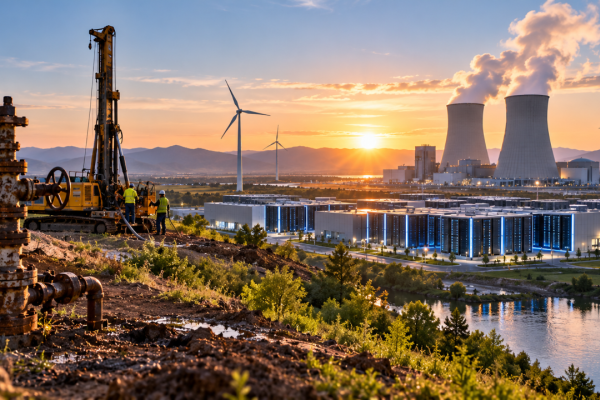
Zefiro Methane (WKN: A3DVHU | ISIN: CA98926D1069 | Ticker Symbol: Y6B) positions itself as a specialized service provider for the decommissioning of abandoned oil and gas wells in the US. The methane escaping from these former wells is considered a particularly potent greenhouse gas. Consequently, regulations and incentive programs in North America are increasing pressure on oil and natural gas companies to measure and reduce these emissions. At the same time, however, US authorities recognize that renewable energy cannot meet the electricity demand for electrification, data centers, and AI, so natural gas is viewed as a flexible bridge technology. Consequently, production companies must increase their remediation investments. US states and the federal government are now funding the proper plugging of abandoned wells through the USD 4.7 billion "Infrastructure Investment and Jobs Act".
According to the USGS database, there are more than 120,000 abandoned wells in 27 US states. In addition, depending on the source, there are up to 1.1 million former wells that have not been properly sealed and are also leaking gas. The long-term remediation potential is estimated at several hundred billion US dollars, leading to the development of a steadily growing remediation market over the years. With its teams of specialists, Zefiro combines operational remediation with the associated emissions measurement. This has also led to the development of tradable emissions credits through methane reduction, thereby expanding the company's future value creation beyond traditional service revenues.
With the cooperation agreement announced in July 2026 with the Well Done Foundation (WDF), the focus is also shifting more strongly toward predictable project pipelines in the US. Zefiro initially received a contract from the WDF to promptly plug 10 wells in the Deep Fork National Wildlife Refuge (Oklahoma). For 2027, approximately 20 additional drill holes have already been identified as the likely next contract under the WDF agreement with the US Fish and Wildlife Service. Also relevant from an operational perspective is the shared use of the WDF depot in Okmulgee, Oklahoma, which solidifies the company's regional presence in a core area of the US oil and gas industry. As a "preferred" contractor, Zefiro is expected to be awarded WDF projects in the 13 US states where the company currently operates. WDF itself is active in 18 states and reports having closed over 120 wells and avoided emissions of over 5 million metric tons of CO2 equivalent.
Zefiro has thus already initiated further operational business expansion. For the first three quarters of fiscal year 2025/26, the company forecasts revenue of approximately USD 33 million and a significantly positive adjusted EBITDA. For the full year, management anticipates revenue of over USD 40 million. With approximately 97.3 million shares outstanding, the market capitalization is about CAD 61.3 million, with a share price of around CAD 0.63 and EUR 0.39, which is 1.5 times annual revenue. If the EBITDA margin remains at 12.8% or even improves, an EBITDA of CAD 5.12 million is expected at year-end.
US Banks Weather a Turbulent Week on the Stock Market: J.P. Morgan Approaches the Trillion Mark
J.P. Morgan Chase (WKN: 850628 | ISIN: US46625H1005 | Ticker: JPM) ended the past trading week up about 1.4%. Since the beginning of the year, the stock is up just under 5%, and on a 52-week basis, it is up about 17%. Its market capitalization currently stands at approximately USD 901 billion, bringing J.P. Morgan ever closer to the USD 1 trillion mark. The largest US bank by assets reported a record profit of USD 21.2 billion, or USD 7.70 per share, for the second quarter. However, this figure included one-time gains from Visa shares and other investments. Excluding these effects, profit stood at USD 16.9 billion, or USD 6.14 per share. Market revenue rose by 35%, while revenue from equity trading surged by as much as 86%. At the same time, investment banking fees increased by 30%. During the past trading week, the stock reached a new all-time high of USD 351.24.
Bank of America (WKN: 858388 | ISIN: US0605051046 | Ticker Symbol: NCB) performed even better. The stock gained about 2% over the week. Since the beginning of the year, the gain has been approximately 9.5%; over the past twelve months, the share price has risen by just under 30%. With a market capitalization of approximately USD 430 billion, Bank of America remains the second-most valuable publicly traded US bank. Net income reached USD 9.1 billion, and trading revenue rose 33% to a record USD 7.1 billion.
Goldman Sachs (WKN: 920332 | ISIN: US38141G1040 | Ticker Symbol: GOS) gained about 1% for the week despite significant profit-taking on Friday. The bank reported net income of USD 6.63 billion and earnings per share of USD 20.98. This stock also hit a new all-time high during the week.
Morgan Stanley (WKN: 885836 | ISIN: US6174464486 | Ticker Symbol: DWD) initially reached a record high as well, but ended the week down about 3%. Citigroup (WKN: A1H92V | ISIN: US1729674242 | Ticker Symbol: TRVC) lost more than 8% as higher-than-expected costs overshadowed its strong financial results.
This week is starting much as the last trading week ended, presenting a mixed picture. From an operational standpoint, the major US banks are in strong shape. However, rising oil prices above USD 80, geopolitical risks, and high valuations could make price movements more volatile again in the coming weeks if inflation risks increase and higher central bank interest rates are priced into the financial markets.
Conflict of interest
Pursuant to §85 of the German Securities Trading Act (WpHG), we point out that Apaton Finance GmbH as well as partners, authors or employees of Apaton Finance GmbH (hereinafter referred to as "Relevant Persons") may hold shares or other financial instruments of the aforementioned companies in the future or may bet on rising or falling prices and thus a conflict of interest may arise in the future. The Relevant Persons reserve the right to buy or sell shares or other financial instruments of the Company at any time (hereinafter each a "Transaction"). Transactions may, under certain circumstances, influence the respective price of the shares or other financial instruments of the Company.
In addition, Apaton Finance GmbH is active in the context of the preparation and publication of the reporting in paid contractual relationships.
For this reason, there is a concrete conflict of interest.
The above information on existing conflicts of interest applies to all types and forms of publication used by Apaton Finance GmbH for publications on companies.
Risk notice
Apaton Finance GmbH offers editors, agencies and companies the opportunity to publish commentaries, interviews, summaries, news and the like on news.financial. These contents are exclusively for the information of the readers and do not represent any call to action or recommendations, neither explicitly nor implicitly they are to be understood as an assurance of possible price developments. The contents do not replace individual expert investment advice and do not constitute an offer to sell the discussed share(s) or other financial instruments, nor an invitation to buy or sell such.
The content is expressly not a financial analysis, but a journalistic or advertising text. Readers or users who make investment decisions or carry out transactions on the basis of the information provided here do so entirely at their own risk. No contractual relationship is established between Apaton Finance GmbH and its readers or the users of its offers, as our information only refers to the company and not to the investment decision of the reader or user.
The acquisition of financial instruments involves high risks, which can lead to the total loss of the invested capital. The information published by Apaton Finance GmbH and its authors is based on careful research. Nevertheless, no liability is assumed for financial losses or a content-related guarantee for the topicality, correctness, appropriateness and completeness of the content provided here. Please also note our Terms of use.