September 2nd, 2026 | 07:05 CEST
Volkswagen, Strategic Resources and TKMS: How to Capitalize on the Mega-Trend of Defence and Raw Materials
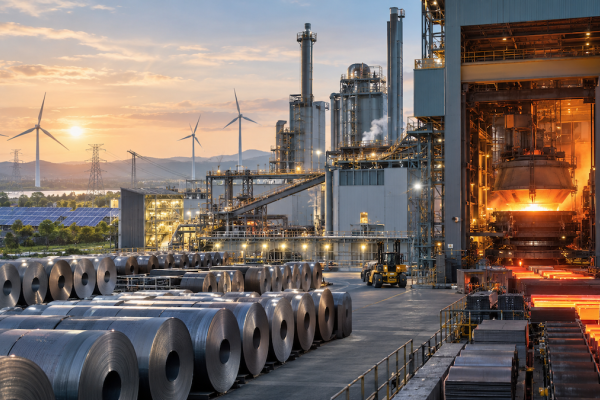
When a vehicle manufacturer becomes a defence contractor, a raw materials developer provides the key to green steel production, and a naval group reports record orders, a realignment of German industry is taking shape. Volkswagen is on the brink of its most profound transformation and is turning to the defence sector as a lifeline. At the same time, the race for strategic resources is intensifying. Without decarbonized steel, there can be no modern defence, and this steel requires specific grades of iron ore. This is precisely where Strategic Resources comes in. While thyssenkrupp Marine Systems is benefiting from full order books, a new value chain is emerging. Today, we take a closer look at the shares of Volkswagen, Strategic Resources and TKMS.
time to read: 5 minutes | Author: Armin Schulz
ISIN: VOLKSWAGEN AG VZO O.N. | DE0007664039 , STRATEGIC RESOURCES INC | CA86277X4093 | TSXV: SR , TKMS AG & CO KGAA | DE000TKMS001
Table of contents:
Author

Armin Schulz
Born in Mönchengladbach, he studied business administration in the Netherlands. In the course of his studies he came into contact with the stock exchange for the first time. He has more than 25 years of experience in stock market business.
Tag cloud
Shares cloud
Volkswagen: In Crisis Mode
Although Volkswagen's turnover in the second quarter remained stable at around EUR 82.4 billion, operating profit fell by 12% to EUR 3.47 billion. Net profit even slumped by 31% to EUR 1.538 billion. At 4.2%, the operating margin slipped to the lower end of the company's own target range. The Executive Board has withdrawn its full-year growth forecast. A decline of up to 3% is now expected. CEO Blume is pushing ahead with the "most comprehensive reorientation in the Group's history", but resistance within the Supervisory Board, where employee representatives and the state of Lower Saxony hold the majority, is blocking swift implementation.
IG Metall has already threatened "unrest in the factories" should management tighten the restructuring measures. According to Chief Financial Officer Antlitz, four plants – Emden, Hanover, Zwickau and Neckarsulm – have no viable production prospects for the 2030s. Continuing operations without capacity adjustments would result in additional annual costs of EUR 1.5 billion. At the same time, the group is considering temporarily converting manufacturing capacity to defence production, with the aim of securing the sites' long-term future and easing the social tensions surrounding them.
Deliveries in China slumped by 25.9% in the first half of the year, with sales of pure electric vehicles falling by as much as 47.9%. Whilst the 'In China, For China' strategy delivers technically sound new vehicles, the ruinous price war and a stagnating overall market are causing even the market leader BYD to falter. Analysts have, in some cases, significantly lowered their valuations. DZ Bank recently revised its fair value down from EUR 95 to EUR 75. The high dividend yield of just under 7% could provide short-term support, but in the long term, VW must successfully navigate the balancing act among plant closures, defence-sector ventures, falling margins in Asia and its own transformation in order to look to the future with optimism.
Strategic Resources: Green Steel, Vanadium and Titanium
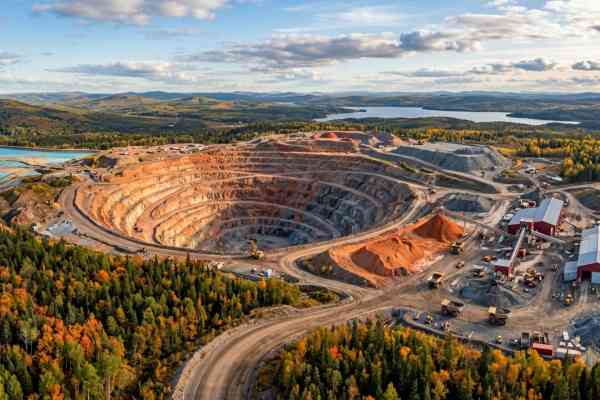
Strategic Resources owns one of North America's most promising vanadium-titanium-iron deposits, the BlackRock project in Québec. The feasibility study indicates a net present value of CAD 1.93 billion with an internal rate of return of 18.2%. These figures demonstrate just how exciting the project is. With a projected mine life of 39 years and reserves of 127.8 million tonnes of ore, the company has a solid foundation for long-term growth. The planned pelletization plant at the deep-water port of Port Saguenay is set to produce 4 million tonnes of high-purity iron ore pellets annually. The location is ideal, as it offers access to affordable hydroelectric power and existing natural gas infrastructure.
In addition to its Canadian flagship project, Strategic Resources holds the Mustavaara project in Finland. Material from this project was recently selected for the EUR 17 million 'Future Sustainable Electric Steel Mill' research project. The University of Oulu and the Swedish steel manufacturer SSAB are testing the suitability of the vanadium-rich magnetite concentrate for hydrogen-based direct reduction. The presence of vanadium led to a partnership with Tyfast Energy to develop a vanadium battery value chain. This opens up opportunities in the growing energy storage market. The share has been listed on the Frankfurt Stock Exchange since April, thereby improving access to European investors who are increasingly focusing on critical minerals.
With a market capitalization of just over CAD 15.3 million, the company stands in striking contrast to the reported project value. This valuation gap reflects the typical risk associated with development projects. Progress is being made on the permits for the iron pellet plant; the final queries from the authorities have been addressed, and support from major shareholders such as Orion Mine Finance, along with government funding in Québec, suggests the project could get off the ground. The final investment decision for Phase 1 is expected in early 2027, with construction due to begin in the summer of 2027. For investors betting on the decarbonization of the steel industry, this offers an opportunity to get involved at a very early stage of the company's development.
TKMS: Between Record Orders and Capacity Issues
TKMS has once again raised its full-year targets. Instead of the previously forecast 2–5% increase in turnover, management is now targeting 10–12% growth. The operating margin is expected to rise to up to 6.5%. The figures for the first nine months of fiscal year 2025/26 underpin this positive trend. Revenue rose by 19% to almost EUR 1.9 billion, whilst adjusted profit increased by 13% to EUR 110 million, exceeding analysts' expectations. The main driver was the submarine business, where operating profit quadrupled. The order book stood at EUR 20.1 billion as at the end of June.
Further orders worth billions have been secured since the end of the quarter. The German Armed Forces ordered four MEKO A-200 DEU-class frigates. The order was worth around EUR 5 billion, with an option for a further four vessels. Even more significant is the selection as the preferred supplier for Canada's submarine program, comprising up to 12 Class 212CD submarines. According to experts, this represents a volume exceeding EUR 10 billion. This means that the order volume has already risen to over EUR 25 billion, with further potential orders worth billions in the pipeline, including the final stages of negotiations with India for six submarines plus an option for three more. This abundance of orders inevitably raises the question of whether there is sufficient production capacity.
However, CEO Oliver Burkhard firmly dismissed any doubts about capacity. TKMS will honour its commitments to customers. At the same time, the group is relying on partnerships. A second memorandum of understanding has been signed with the Spanish shipyard Navantia. A joint framework for selected submarine projects is to be established by the end of the year. Plans to acquire the German Naval Yards shipyard in Kiel have been shelved after the parties failed to agree on the financial terms. Burkhard described the takeover as an option rather than a necessity. Instead, the group is relying on its existing shipyards in Kiel and Wismar.
German industry is undergoing a reorientation in which defence and raw materials are becoming key components. Volkswagen is struggling with its transformation while in crisis mode and is exploring defence production as a potential new direction for its plants, whilst falling margins in Asia and internal bottlenecks are weighing on the group. Strategic Resources holds the key to green steel production with its BlackRock project, yet the share price is trading well below the reported project value. TKMS, on the other hand, is shining with record orders worth over EUR 25 billion and is setting the course for further growth.
Conflict of interest
Pursuant to §85 of the German Securities Trading Act (WpHG), we point out that Apaton Finance GmbH as well as partners, authors or employees of Apaton Finance GmbH (hereinafter referred to as "Relevant Persons") currently hold or hold shares or other financial instruments of the aforementioned companies and speculate on their price developments. In this respect, they intend to sell or acquire shares or other financial instruments of the companies (hereinafter each referred to as a "Transaction"). Transactions may thereby influence the respective price of the shares or other financial instruments of the Company.
In this respect, there is a concrete conflict of interest in the reporting on the companies.
In addition, Apaton Finance GmbH is active in the context of the preparation and publication of the reporting in paid contractual relationships.
For this reason, there is also a concrete conflict of interest.
The above information on existing conflicts of interest applies to all types and forms of publication used by Apaton Finance GmbH for publications on companies.
Risk notice
Apaton Finance GmbH offers editors, agencies and companies the opportunity to publish commentaries, interviews, summaries, news and the like on news.financial. These contents are exclusively for the information of the readers and do not represent any call to action or recommendations, neither explicitly nor implicitly they are to be understood as an assurance of possible price developments. The contents do not replace individual expert investment advice and do not constitute an offer to sell the discussed share(s) or other financial instruments, nor an invitation to buy or sell such.
The content is expressly not a financial analysis, but a journalistic or advertising text. Readers or users who make investment decisions or carry out transactions on the basis of the information provided here do so entirely at their own risk. No contractual relationship is established between Apaton Finance GmbH and its readers or the users of its offers, as our information only refers to the company and not to the investment decision of the reader or user.
The acquisition of financial instruments involves high risks, which can lead to the total loss of the invested capital. The information published by Apaton Finance GmbH and its authors is based on careful research. Nevertheless, no liability is assumed for financial losses or a content-related guarantee for the topicality, correctness, appropriateness and completeness of the content provided here. Please also note our Terms of use.