June 25th, 2026 | 07:00 CEST
Uranium, Lithium, Oil: A Stock Analysis of PLS Group, American Atomics, and TotalEnergies
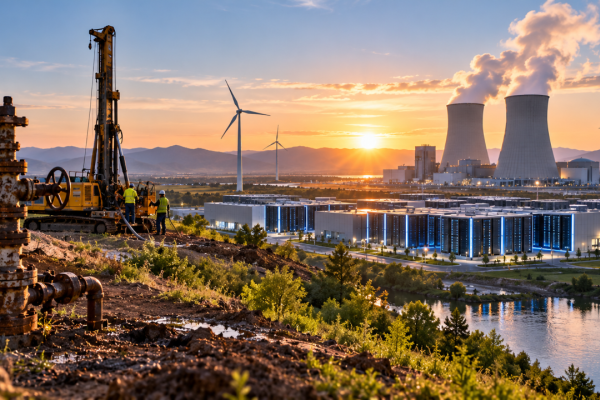
Energy, energy, energy! This is a critical issue—and not just at a time when Europe desperately needs more air conditioning. The AI revolution is driving demand for solutions at an unprecedented rate. The US is particularly affected, as the expansion of data centers there is proceeding at a rapid pace. Analysts estimate that the so-called AI hyperscalers will invest more than USD 700 billion in expansion this year. The US power grid is not equipped to handle this, so utilities, solar and wind farm developers, as well as natural gas companies, are currently benefiting the most. But in addition to AI, the growth of the electric vehicle fleet is also a major issue. And last but not least, parts of the European power grid also need to be expanded and modernized. Demand for lithium, uranium, and oil is therefore likely to grow steadily in the coming years and decades. That is why today we are taking a closer look at the stocks of PLS Group, American Atomics, and TotalEnergies.
time to read: 5 minutes
|
Author:
Tarik Dede
ISIN:
AMERICAN ATOMICS INC | CA0240301089 | CSE: NUKE , TOTALENERGIES SE | FR0000120271 , PLS GROUP LIMITED | AU000000PLS0 | ASX: PLS
Table of contents:
Author

Tarik Dede
Even as a high school student in northern Germany, he developed a strong interest in the “Neuer Markt” and the dynamics of the equity markets. Small- and mid-cap companies were at the center of his focus from the very beginning. After completing his training as a certified bank clerk, he deepened his economic expertise through formal studies in economics as well as through various positions within Frankfurt’s financial sector. Today, he has been actively involved in the capital markets for more than 25 years, both professionally and as a private investor.
Tag cloud
Shares cloud
PLS Group: Successful Turnaround
PLS Group, formerly known as Pilbara Minerals, is one of Australia's largest lithium producers. The company experienced a steep rise during the boom years of the last decade before lithium prices plummeted. Now, however, the market appears to be closer to equilibrium again. Analysts expect lithium prices to stabilize and believe the worst is over. Demand for electric vehicles and energy storage systems is driving the market.
Even during difficult times, the PLS Group went all out, continuously increasing production. In 2025, however, it suffered a sharp 39% decline in revenue to approximately AUD 769 million. Sales prices had fallen by more than a third. Consequently, the Australian company posted a heavy loss of AUD 196 million.
But the tide has turned. In the first half of 2026, the company returned to profitability. PLS posted a net income of AUD 33 million. Revenue delivered an impressive performance, rising 47% to AUD 624 million. Analysts particularly praise management's strict cost control. Despite the tough years, the balance sheet looks strong. Liquidity stands at around AUD 1.5 billion, making the company clearly one of the sector's strongest financially. On the other hand, shareholders must accept that there will be no dividends for the time being. At PLS, the focus is currently on growth.
Management aims to transform the company from a mining firm into a global, vertically integrated chemical conglomerate. The US company Albemarle is likely serving as the model here. This year, management expects record production of 820,000 to 870,000 metric tonnes of spodumene concentrate. In the long term, the goal is to sustainably produce 1 million metric tonnes per year. As is so often the case, the stock market has already priced in this positive development. PLS's stock has multiplied in value since 2025. In recent weeks, there has been a sort of correction. Anyone looking to buy should first wait for the stock to firmly find a bottom.
American Atomics: When will the stock break out?
China is currently building and planning dozens of nuclear power plants. Other nations are also moving toward or returning to nuclear power. The US has only recently rediscovered this energy source as a result of the war in Ukraine. In the meantime, decisions have already been made to restart old reactors, such as Three Mile Island, to meet the enormous demand for AI data centers.
The Trump administration now has very ambitious plans. By 2050, capacity is to be expanded to up to 400 gigawatts. However, there are very few uranium producers in the country. Russia and Kazakhstan are key suppliers, but the US plans to stop importing material from Russia starting in 2028. This development has triggered a boom among uranium explorers in the US, although there are still only a few promising projects there. American Atomics is one of the few companies that has set to work. Management aims to become a vertically integrated company in the nuclear sector, following a "rock-to-reactor" strategy. In addition to mining, the company also plans to undertake the processing and refining of uranium.
The starting point, of course, is the deposit itself. American Atomics has secured the Big Indian project in Utah. It is located in the heart of the Lisbon Valley Mining District, a historic uranium mining area in the southeastern part of the state. At Big Indian, the company holds 217 contiguous claims. Under the terms of an agreement, American Atomics can increase its stake to up to 80%. The company can leverage historical data from the oil and gas industry, which greatly facilitates exploration. For the processing of the material, the company has already secured CVMR, an experienced and globally active corporation, as a partner. A modern uranium mill is to be built as part of a joint venture.
American Atomics shares have been trading sideways since the beginning of the year. Bold investors are buying shares below CAD 0.30 and betting on a breakout. In case of doubt, operational progress—such as drilling results or positive news from Washington—may be enough to trigger this.
TotalEnergies: Open and Closed Straits
Meanwhile, the conflict in the Persian Gulf is slowly subsiding. Negotiations are underway between Iran and the US. However, there are repeated disruptions, and so the Strait of Hormuz is sometimes closed and sometimes open again, if media reports are to be believed. The truth likely lies somewhere in the middle. Bloomberg reported at the start of the week that shipping traffic currently stands at around 30% of pre-war levels. For oil companies, however, one thing is clear: prices in most places are above pre-conflict levels. TotalEnergies is one of the world's largest oil producers. The war was already reflected in the company's first-quarter figures. The Paris-based company posted a net profit of EUR 4.96 billion, significantly higher than in the same quarter of the previous year. Consequently, the dividend was raised to EUR 0.90 per share for the quarter. Projected over the full year at the current share price, this results in a dividend yield of more than 5%. In addition, a share buyback program worth approximately EUR 1.5 billion is underway.
The question remains: will profits continue to flow in the coming months? Total is likely to report another strong profit in the second quarter, though the figures are not yet available. However, oil prices have since fallen noticeably. At the same time, inventories are running low, particularly in North America. So there are many conflicting signals in the market. What is more, who knows whether hostilities resume or not? The US president has been very "volatile" in his decisions, and not just during the conflict. In this regard, investing in TotalEnergies is only advisable for those who firmly expect oil prices to remain stable or rise.
With the PLS Group, investors are betting on Australia's largest lithium producer. The company is currently benefiting from rising demand and higher prices. American Atomics aims to close the uranium gap created by the US nuclear energy comeback. The share's prolonged sideways movement makes it an attractive buying opportunity. With TotalEnergies, investors can primarily bet on the outcome of negotiations between Iran and the US. Anyone investing here is betting on stable or even rising oil prices.
Conflict of interest
Pursuant to §85 of the German Securities Trading Act (WpHG), we point out that Apaton Finance GmbH as well as partners, authors or employees of Apaton Finance GmbH (hereinafter referred to as "Relevant Persons") may hold shares or other financial instruments of the aforementioned companies in the future or may bet on rising or falling prices and thus a conflict of interest may arise in the future. The Relevant Persons reserve the right to buy or sell shares or other financial instruments of the Company at any time (hereinafter each a "Transaction"). Transactions may, under certain circumstances, influence the respective price of the shares or other financial instruments of the Company.
In addition, Apaton Finance GmbH is active in the context of the preparation and publication of the reporting in paid contractual relationships.
For this reason, there is a concrete conflict of interest.
The above information on existing conflicts of interest applies to all types and forms of publication used by Apaton Finance GmbH for publications on companies.
Risk notice
Apaton Finance GmbH offers editors, agencies and companies the opportunity to publish commentaries, interviews, summaries, news and the like on news.financial. These contents are exclusively for the information of the readers and do not represent any call to action or recommendations, neither explicitly nor implicitly they are to be understood as an assurance of possible price developments. The contents do not replace individual expert investment advice and do not constitute an offer to sell the discussed share(s) or other financial instruments, nor an invitation to buy or sell such.
The content is expressly not a financial analysis, but a journalistic or advertising text. Readers or users who make investment decisions or carry out transactions on the basis of the information provided here do so entirely at their own risk. No contractual relationship is established between Apaton Finance GmbH and its readers or the users of its offers, as our information only refers to the company and not to the investment decision of the reader or user.
The acquisition of financial instruments involves high risks, which can lead to the total loss of the invested capital. The information published by Apaton Finance GmbH and its authors is based on careful research. Nevertheless, no liability is assumed for financial losses or a content-related guarantee for the topicality, correctness, appropriateness and completeness of the content provided here. Please also note our Terms of use.