The decarbonization of the global economy is no longer a distant ideal, but a fiercely contested race for market share. While some are betting on pure battery solutions, it is becoming increasingly clear that the future belongs to hybrid systems, in which innovative materials and green hydrogen fill the gaps. Three players from different camps exemplify this shift and could be tomorrow's winners. This look at the heart of industrial transformation reveals the roles played by a Chinese electric vehicle giant, a Canadian innovator in superior anodes, and the American pioneer in hydrogen logistics. We therefore take a closer look at what makes BYD, HPQ Silicon, and Plug Power so special right now.
time to read: 5 minutes
|
Author:
Armin Schulz
ISIN:
HPQ SILICON INC | CA40444L1031 | TSXV: HPQ , OTCQB: HPQFF , BYD CO. LTD H YC 1 | CNE100000296 , PLUG POWER INC. DL-_01 | US72919P2020
Table of contents:
Author

Armin Schulz
Born in Mönchengladbach, he studied business administration in the Netherlands. In the course of his studies he came into contact with the stock exchange for the first time. He has more than 25 years of experience in stock market business.
Tag cloud
Shares cloud
BYD - Between a Technology Push and Market Pressure
The Chinese are pushing their battery development forward with unusual aggressiveness. The second generation of the Blade cell uses LMFP chemistry with silicon-carbon anodes, increasing cell voltage by nearly 19%. Energy density climbs to up to 210 Wh/kg, while 3C charging enables a sprint from 10% to 70% in 5 minutes. In parallel, developers are working on sodium-ion batteries for affordable entry-level models as well as on sulfide-based solid-state cells with 400 Wh/kg. Both technologies are scheduled to enter small-scale production starting in 2027. Added to this is an impressive lifespan of over 3,000 cycles, combined with nail penetration resistance. With this, BYD is addressing the biggest hurdles of e-mobility: charging time, costs, and long-term reliability.
However, the latest financial results show a decline in profitability. In the first quarter, net profit plummeted by 55%, and revenue fell for the third consecutive time. In the domestic market, sales in April dropped for the eighth month in a row. Since the start of the year, 1.02 million NEVs have been delivered, a 26% decline. The cause is the ruinous price war with rivals such as Xiaomi and Geely, which is increasingly eroding margins. At least exports rose by 71% to over 134,500 vehicles. To stay competitive, BYD is now offering LiDAR as an option on its Seagull microcar. The company is now pinning its hopes heavily on overseas markets to offset the domestic slump.
At the same time, the company is building out its own ultra-fast charging infrastructure. By the end of 2026, 20,000 charging points with 1,500 kW of power are to be built; over 4,000 are already complete. Five minutes will then be enough for a 400 km range. The battery division, FinDreams, aims to achieve costs under USD 70 per kilowatt-hour by 2027. In light of domestic pressure, BYD is increasingly focusing on Europe. A plant in Hungary is set to begin operations soon. Additionally, management plans to enter the fleet business in the UK with a light commercial vehicle. The course has been set for global scaling. The question remains: how quickly will profitability follow? The share is currently trading at EUR 10.852.
HPQ Silicon - From Lab to Serial Orders
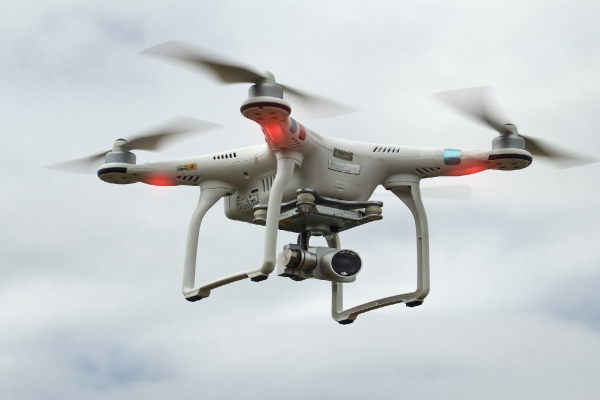
Canada's HPQ Silicon is working on several material innovations simultaneously, and this is now becoming a real test of its credibility. In April, the company reported two concrete advancements. A European drone manufacturer placed an initial order for battery packs based on its Gen4 silicon anodes. As a reminder, these cells had recently surpassed the 7,000 mAh mark in laboratory testing, achieving an energy density of just under 320 Wh/kg. The customer is paying the standard commercial price. This may sound unspectacular, but it is not. The time between the initial inquiry and the order was not months, but only a few weeks. That pace is highly unusual in this industry.
The second piece of news from April also shows how the company is improving efficiency in the battery sector. A semi-solid drone battery using Gen4 material delivered 395 Wh/kg at the pack level. That is about a quarter more than standard lithium-polymer packs achieve, with a weight of just under 1.2 kg. More important than the number itself is what it signifies. The technology works not only in standard cylinders (21700) but also in other cell architectures. This significantly reduces the integration risk for potential customers. Once a product has been qualified, the material can be used across multiple product lines. This is precisely what makes it attractive to manufacturers who need flexibility.
HPQ is currently transitioning from a pure materials developer to a system provider. Instead of just supplying the silica powder, the company assembles complete, custom-made packs. This fosters customer loyalty and provides a competitive advantage over pure materials suppliers. The first orders are not huge, but they are real. In parallel, a letter of intent was signed in February for a joint venture in the fumed silica division for a 1,000-ton plant. Investors looking to get a sense of the situation have reason to be excited. If the company succeeds in generating series orders from these pilot contacts in the coming quarters, this should give the stock a boost. The share is currently trading at CAD 0.185.
Plug Power - The turnaround is visible
The latest quarterly figures read like a minor miracle for the hydrogen pioneer. Revenue of USD 163.5 million represents a 22% increase, while the gross margin shot up from -55% to -13%. The electrolysis division, in particular, literally exploded with 343% growth, driven by major projects in Portugal and Spain. The operating loss per share improved from USD 0.17 to USD 0.08. Management speaks of a true turning point, and for the first time, the numbers do not seem like hot air.
To ensure this is not just a snapshot, the liquidity issue must be addressed above all else. Plug Power ended the quarter with USD 802 million in cash reserves, but only USD 223 million of that is freely available. The rest is tied up in restricted funds and is being released only slowly, at a rate of about USD 50 million per quarter. That is why management is counting on asset sales of around USD 275 million, with the first tranche of USD 142 million expected in June. This is complemented by the USD 1.66 billion guarantee from the US Department of Energy as a safety net. This marks a real difference from previous financing rounds.
Should the hydrogen economy truly gain global momentum, Plug Power is well-positioned. Vertical integration, such as in-house production, transportation, storage, and conversion, makes the company less reliant on third-party suppliers and reduces costs in the long term. New applications, such as powering AI data centers with fuel cells, could trigger additional waves of demand. The 275 MW major order from Quebec for the Hy2gen project shows that Plug can compete in industrial projects. The company's self-imposed target is positive EBITDA in the fourth quarter of 2026. Currently, a share costs USD 3.52.
Batteries alone are not enough. The future belongs to hybrid systems combining storage, innovative materials, and green hydrogen. BYD is struggling with shrinking margins in a ruinous price war, but is simultaneously building an ultra-strong charging infrastructure and driving internationalization forward with the second generation of the Blade battery. HPQ Silicon is supplying commercial silicon anodes for drones for the first time, proving that its high-tech materials are ready for mass production. Plug Power is climbing out of the red thanks to a flood of major orders and government guarantees. Those who bet on these three are betting on a pragmatic, technologically open hybrid transformation.
Conflict of interest
Pursuant to §85 of the German Securities Trading Act (WpHG), we point out that Apaton Finance GmbH as well as partners, authors or employees of Apaton Finance GmbH (hereinafter referred to as "Relevant Persons") currently hold or hold shares or other financial instruments of the aforementioned companies and speculate on their price developments. In this respect, they intend to sell or acquire shares or other financial instruments of the companies (hereinafter each referred to as a "Transaction"). Transactions may thereby influence the respective price of the shares or other financial instruments of the Company.
In this respect, there is a concrete conflict of interest in the reporting on the companies.
In addition, Apaton Finance GmbH is active in the context of the preparation and publication of the reporting in paid contractual relationships.
For this reason, there is also a concrete conflict of interest.
The above information on existing conflicts of interest applies to all types and forms of publication used by Apaton Finance GmbH for publications on companies.
Risk notice
Apaton Finance GmbH offers editors, agencies and companies the opportunity to publish commentaries, interviews, summaries, news and the like on news.financial. These contents are exclusively for the information of the readers and do not represent any call to action or recommendations, neither explicitly nor implicitly they are to be understood as an assurance of possible price developments. The contents do not replace individual expert investment advice and do not constitute an offer to sell the discussed share(s) or other financial instruments, nor an invitation to buy or sell such.
The content is expressly not a financial analysis, but a journalistic or advertising text. Readers or users who make investment decisions or carry out transactions on the basis of the information provided here do so entirely at their own risk. No contractual relationship is established between Apaton Finance GmbH and its readers or the users of its offers, as our information only refers to the company and not to the investment decision of the reader or user.
The acquisition of financial instruments involves high risks, which can lead to the total loss of the invested capital. The information published by Apaton Finance GmbH and its authors is based on careful research. Nevertheless, no liability is assumed for financial losses or a content-related guarantee for the topicality, correctness, appropriateness and completeness of the content provided here. Please also note our Terms of use.