
renewableenergy

Commented by Nico Popp on August 18th, 2026 | 08:35 CEST
The Easy Path to Carbon-Free Computing Power: How NU E Power Aims to Make Things Easier for Companies Like Amazon and SAP
Created and Published on Behalf of NU E Power Corp.
Computing power for artificial intelligence requires enormous amounts of energy. But that is not the only challenge: power grids are already overloaded in many areas, and the combination of data centers, air conditioning systems and EV charging stations is putting additional strain on infrastructure. As a result, technology companies are increasingly factoring energy supply directly into their plans for new data centers. Ideally, that power should be sustainable while also providing reliable baseload capacity. Since energy infrastructure requires regulatory approval and suitable locations are scarce, an interesting market has emerged around powering data centers. We take a look at the situation and examine not only tech giants Amazon and SAP but also newcomer NU E Power.
Read
Commented by Fabian Lorenz on August 18th, 2026 | 07:20 CEST
Nel ASA Hopeless? dynaCERT Poised for a Comeback — While SFC Energy Is Already Taking Off
Is there still hope for Nel ASA? At present, there appear to be few short-term catalysts for the stock. Growth remains limited, while losses are rising sharply. Analysts have also recently slashed their price targets. In contrast, there are strong indications that dynaCERT's stock is poised for a comeback. The cleantech company has once again reported progress in marketing its technology for reducing fuel consumption and emissions from existing diesel engines in Asia. This could prove the analysts right. They see significant upside potential for dynaCERT. SFC Energy provides an example of what a powerful comeback can look like. Analysts have raised their price targets and continue to see further upside even after the rally of more than 50%.
Read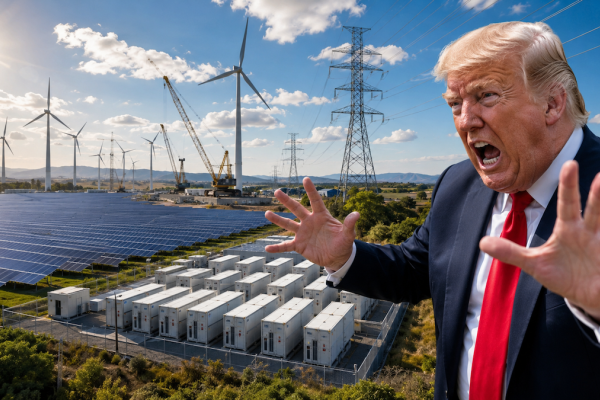
Commented by Fabian Lorenz on August 18th, 2026 | 07:10 CEST
Renewable Energy Is Booming! Trump Is Furious! Winners Include First Solar, NextEra Energy, Siemens Energy and RE Royalties
This development is unlikely to please US President Donald Trump. Renewable energy is gaining ground in the United States. While the US government is paying more than USD 1 billion to prevent RWE from building an offshore wind project, solar power generation is increasing by around 21%. Falling costs, rising electricity demand—particularly from data centers and AI—and the enormous need for new generation capacity are creating opportunities for companies such as First Solar and NextEra Energy. German companies including Nordex, SMA Solar and even gas specialist Siemens Energy are also among the potential beneficiaries. Another interesting small-cap is RE Royalties, which also has potential takeover appeal.
Read
Commented by André Will-Laudien on August 17th, 2026 | 08:00 CEST
Energy Transition 2.0: This is where sustainable growth is happening - Alibaba, RE Royalties, Alphabet and Amazon
The energy transition is moving into its next phase. The evolutionary step toward global decarbonization is being completely redefined by the convergence of clean energy and artificial intelligence. In this dynamic market environment, investors are increasingly seeking future-proof business models that combine environmental sustainability with solid financial returns. Alongside the specialized cleantech financier RE Royalties, three tech giants are drawing particular attention due to their historical investments. Alphabet, Google's parent company, is setting new standards by aiming to power its massive data streams entirely with CO₂-free energy available around the clock. Online marketplace leader Amazon is also reinforcing its claim as the world's largest private purchaser of renewable energy through massive wind and solar projects. E-commerce giant Alibaba is also investing heavily in green supply chains and AI-powered energy efficiency for its data centers. Four companies, four approaches impressively demonstrating that technological dominance and environmental responsibility go hand in hand today.
Read
Commented by Stefan Feulner on August 17th, 2026 | 07:00 CEST
Constellation Energy, NU E Power, Siemens: These stocks are at the heart of the energy boom
Created and Published on Behalf of NU E Power Corp.
The AI boom faces an energy problem that cannot be solved simply by developing better chips. New data centers consume enormous amounts of energy, while grid connections and additional generation capacity are becoming increasingly scarce in many regions. As a result, Hyperscalers are securing long-term nuclear power, investing in their own energy solutions, and accelerating the development of new energy infrastructure. This is creating a massive multi-billion-dollar market beyond the familiar AI stocks. Particularly interesting are companies that generate and supply electricity, provide the necessary infrastructure, or develop new energy parks specifically to meet the growing power demands of data centers.
Read
Commented by Stefan Feulner on August 14th, 2026 | 07:50 CEST
At the Heart of the Electricity Boom: ERock, Zefiro Methane and Uniper
The explosive growth in electricity demand from AI data centers is transforming the energy market. Because grid connections often take years to establish and renewable energy sources alone cannot guarantee a continuous supply, natural gas—as a flexible energy source—is experiencing a new surge in demand. Billions are flowing into decentralized power plants and new infrastructure. At the same time, pressure is mounting to clean up the legacy issues of the oil and gas industry and reduce methane emissions. Three companies could benefit from different aspects of this massive investment cycle.
Read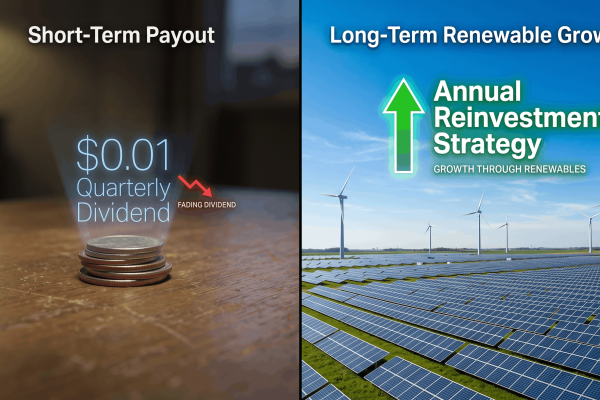
Commented by Nico Popp on August 14th, 2026 | 07:25 CEST
Sustainable Dividend Kings: Schneider Electric, Munich Re, and RE Royalties
Wars, inflation, and a faltering industrial sector—many investors must have rubbed their eyes in disbelief at the DAX's recent record-breaking run. But instead of pulling all their chips off the table and selling stocks, it might make sense to invest more defensively in uncertain times. As a rule, dividends already provide a safety cushion against price fluctuations. When companies also have a strong ESG profile, investors can often sleep even more soundly. We examine three companies and highlight their opportunities.
Read
Commented by Fabian Lorenz on August 13th, 2026 | 07:55 CEST
Plug Power Shows Light and Shadow! Siemens Energy Back Above EUR 200? Drone Potential at HPQ Silicon!
The US is under increasing pressure when it comes to military drones. China and Iran are ruthlessly exposing the US's need to catch up. Washington is pushing to build its own supply chains. HPQ Silicon could benefit from this. Several potential customers in the drone and defence sectors are already testing the company's advanced battery technology. The stock hasn't yet drawn much attention. Siemens Energy is a long-term performer in the AI boom. The company once again delivered strong results last quarter. Analysts believe the stock could break through the EUR 200 mark. There are also positive signs in Plug Power's quarterly report. But the big question remains: how will liquidity be secured until the company turns a profit?
Read
Commented by Stefan Bode on August 13th, 2026 | 07:50 CEST
Stock Market Roller Coaster: Between Dramatic Price Plunges, Record Figures, and Strategic Turnarounds - Almonty Industries, PNE and Puma
The current stock market environment presents an extreme mix of risks and opportunities. While a renewable energy project developer is reeling from a dramatic stock plunge following dashed takeover hopes, a producer of system-critical raw materials is shining with record growth thanks to strategic market power. At the same time, a global sporting goods conglomerate is struggling at a crucial technical level. Today's commentary highlights where further price losses loom and which potentials the market is currently mispricing.
Read
Commented by Matthias Schomber on August 13th, 2026 | 07:10 CEST
BYD, BMW, and RE Royalties in the Spotlight: Price War, Plummeting Profits, Job Cuts, and Green Dividends
Globally, it currently seems as though the auto industry is sitting on a veritable powder keg. Industry giants like BYD and BMW are embroiled in a fierce, perhaps even ruinous, price war. Established automakers are grappling with painful profit slumps and drastic market shifts. Investors, however, are increasingly seeking stable alternatives. As a result, stocks from various sectors, including renewable energy, may now step into the spotlight. One exciting player in this space is RE Royalties. The Canadian company is a pioneer in financing green projects. Even aside from the major automotive crises, it continues to grow steadily. Can this stock really be a safe haven? We take an in-depth look at the current developments at three companies. We compare hard facts and analyze technical charts. Traditional auto manufacturing meets Asian dominance and innovative financing. Read on and discover the opportunities offered by this trio.
Read