April 2nd, 2025 | 07:10 CEST
Steyr Motors, Power Metallic Mines, BYD – From unique selling point to market leader
In the context of geopolitical tariffs and green transformation, drive technology, raw material extraction, and e-mobility are merging into key sectors. While US automotive tariffs are setting new rules from 2025, three players are driving systemic solutions: Steyr Motors, a pioneer in high-performance hybrid engines; Power Metallic Mines, which is setting ESG standards with carbon-neutral nickel; and BYD, which is dominating e-mobility through innovation. Their strategies – technological sovereignty, vertical integration, and resource-efficient ecosystems – demonstrate how the apparent contradictions between decarbonization and industrial reality can be overcome. Three companies, one mission: to shape the value chain of tomorrow.
time to read: 4 minutes
|
Author:
Armin Schulz
ISIN:
STEYR MOTORS AG | AT0000A3FW25 , POWER METALLIC MINES INC. | CA73929R1055 , BYD CO. LTD H YC 1 | CNE100000296
Table of contents:
Author

Armin Schulz
Born in Mönchengladbach, he studied business administration in the Netherlands. In the course of his studies he came into contact with the stock exchange for the first time. He has more than 25 years of experience in stock market business.
Tag cloud
Shares cloud
Steyr Motors – Full order books
Steyr Motors AG is renowned among experts as a specialist in high-performance engines with impressive power density and durability. Thanks to its extensive expertise in areas such as defense vehicles, maritime applications, and auxiliary power units, the Company has a unique selling point from which it is increasingly profiting. A key success factor is the precisely engineered engines that function flawlessly in critical situations, securing the trust of demanding customers. This focus on quality and reliability forms the foundation of the growth momentum that Steyr Motors has built up over the years.
To expand its market position in a targeted manner, Steyr Motors relies on international expansion and strategic partnerships. New sales channels have been opened up in Asia, while additional growth prospects have been identified in MENA countries and North and South America. One highlight is the partnership with Rheinmetall Landsysteme GmbH, which aims to develop innovative diesel technologies for military platforms and underpins Steyr Motors' role as a pioneer in defense technology. This international positioning is accompanied by an ambitious acquisition strategy to sustainably expand the product portfolio and sales structures.
With a bulging order book, Steyr Motors is looking to the future with optimism. Until 2027, secured orders amount to almost EUR 200 million. This stable foundation is underpinned by a strong demand for high-performance engines for military and civilian applications. This trend should continue to gain momentum in uncertain geopolitical times. The Company intends to not only consolidate its market position but also grow in the long term through the sales networks it has already established in Asia, as well as the targeted expansion of its manufacturing capacities. The share price has come back down to earth after the exaggerated highs and is currently trading at EUR 51.00.
Power Metallic Mines – Dynamic progress in exploration
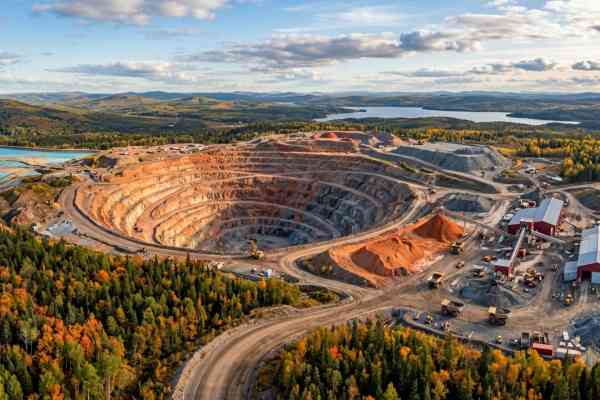
Power Metallic Mines has a unique selling point in the highly competitive mining sector by combining state-of-the-art technologies with polymetallic deposits. The Company is focusing on the NISK nickel-copper project in Québec, which, according to analysts at ROTH, has around 6 million tons of resources, including nickel, copper, and metals from the platinum group, such as platinum and palladium. Experts estimate the net present value to be around CAD 1.15 billion. The key to success is the use of ambient noise tomography methods, which significantly increase the accuracy of drilling. This precision makes it possible to efficiently develop sulfide deposits – a clear competitive advantage.
On March 17, Power Metallic Mines announced that it would double its drilling capacity at the NISK project: Six drill rigs will be in operation by June instead of the previous three. The background to this is the ambitious plan to complete a total of 100,000 meters of drilling by the end of 2026. The focus is on expanding the Lion and Tiger polymetallic zones and exploring a 5.5 km untested distance between them. In order to avoid bottlenecks in core logistics, the logistics infrastructure is being modernized – a strategic step to triple the pace of resource development.
Drill results released on March 25 underscore the strategy's success to date. In the "Lion" zone, the Company confirmed with drill hole PN-24-093 the deepest mineralization ever analyzed at 31.05 meters, with 0.13 g/t gold, 2.74 g/t silver, 0.37% copper, 1.16 g/t palladium, 0.18 g/t platinum, and 0.09% nickel. A 1.55 m interval with 65.09 g/t palladium from drill hole PN-24-086 is particularly noteworthy. In the "Tiger" zone, 700 meters to the east, massive nickel-copper sulfides with grades of up to 4.50% copper equivalent were detected for the first time in drill hole PN-24-094. With a current price of CAD 1.38, the stock has a market capitalization of just CAD 276 million.
BYD – Repeatedly setting new standards
The Chinese automotive market is in the throes of radical change. Electric and hybrid vehicles are increasingly coming to the fore. BYD has made a name for itself as an innovative manufacturer in this field. With a vision of focusing primarily on future-oriented technologies, the Chinese company has secured a competitive advantage and is now one of the most innovative automakers and has become one of the world's largest manufacturers of electric vehicles. The domestic market provides an additional tailwind – almost every second newly registered vehicle in China is already electric or hybrid. This development opens up enormous opportunities for BYD.
Another trump card for the Company is that it almost entirely produces the critical components itself. This vertical integration not only saves costs but also drives technological advances. One example is the newly developed ultra-fast charging system, which gives electric vehicles a range of up to 400 km in just five minutes. With charging capacities of up to 1,000 kilowatts, BYD is specifically addressing the widespread "range anxiety". Such innovations underscore the Company's global ambitions and consolidate its pioneering role in the electric mobility industry.
In addition, BYD is driving forward its expansion into international markets by setting up production and assembly sites in regions such as Thailand and Hungary. This regionalization strategy avoids high import duties while promoting local value creation. With competitive models at attractive prices, such as the Dolphin, BYD also appeals to a broad customer segment and underscores its advantage over competitors in the global e-vehicle market. Thanks to its innovative strength and strategic approach, BYD can benefit from growing demand for sustainable mobility over the long term. The stock has performed well recently, in contrast to many competitors, and currently costs EUR 45.81.
In the race for technological sovereignty and decarbonization, Steyr Motors, Power Metallic Mines, and BYD show how innovations are redefining global value chains. Steyr Motors is consolidating its role as a niche pioneer with high-performance engines and military cooperation, while Power Metallic Mines is setting ESG standards in mining through carbon-neutral polymetal extraction and innovative drilling technologies. BYD dominates global e-mobility with vertically integrated e-vehicles and ultra-fast charging technologies. Together, they demonstrate that green transformation and industrial competitiveness need not be contradictions.
Conflict of interest
Pursuant to §85 of the German Securities Trading Act (WpHG), we point out that Apaton Finance GmbH as well as partners, authors or employees of Apaton Finance GmbH (hereinafter referred to as "Relevant Persons") may hold shares or other financial instruments of the aforementioned companies in the future or may bet on rising or falling prices and thus a conflict of interest may arise in the future. The Relevant Persons reserve the right to buy or sell shares or other financial instruments of the Company at any time (hereinafter each a "Transaction"). Transactions may, under certain circumstances, influence the respective price of the shares or other financial instruments of the Company.
In addition, Apaton Finance GmbH is active in the context of the preparation and publication of the reporting in paid contractual relationships.
For this reason, there is a concrete conflict of interest.
The above information on existing conflicts of interest applies to all types and forms of publication used by Apaton Finance GmbH for publications on companies.
Risk notice
Apaton Finance GmbH offers editors, agencies and companies the opportunity to publish commentaries, interviews, summaries, news and the like on news.financial. These contents are exclusively for the information of the readers and do not represent any call to action or recommendations, neither explicitly nor implicitly they are to be understood as an assurance of possible price developments. The contents do not replace individual expert investment advice and do not constitute an offer to sell the discussed share(s) or other financial instruments, nor an invitation to buy or sell such.
The content is expressly not a financial analysis, but a journalistic or advertising text. Readers or users who make investment decisions or carry out transactions on the basis of the information provided here do so entirely at their own risk. No contractual relationship is established between Apaton Finance GmbH and its readers or the users of its offers, as our information only refers to the company and not to the investment decision of the reader or user.
The acquisition of financial instruments involves high risks, which can lead to the total loss of the invested capital. The information published by Apaton Finance GmbH and its authors is based on careful research. Nevertheless, no liability is assumed for financial losses or a content-related guarantee for the topicality, correctness, appropriateness and completeness of the content provided here. Please also note our Terms of use.