October 26th, 2026 | 05:27 CET
Shell, Zefiro Methane and BP: Oil Stocks Ahead of Earnings, Legacy Wells Create Opportunities for Specialists
Created and published on behalf of Zefiro Methane Corp.
Shell and BP are due to report their third-quarter results next week, with Shell scheduled for October 29 and BP for the following day. Both groups have already briefed investors on the quarter. But production and refining margins are only half the story. The oil industry also leaves behind legacy liabilities, from methane leaks to orphaned wells. Policymakers are paying closer attention, although on October 22 the European Parliament postponed methane reporting requirements for importers of oil, gas and coal until the end of May 2031. This creates work for specialists tasked with addressing the problem. We take a closer look at Shell, Zefiro Methane and BP.
time to read: 5 minutes | Author: Armin Schulz
ISIN: Zefiro Methane Corp | CA98926D1069 , Shell PLC | GB00BP6MXD84 , BP PLC | GB0007980591
Table of contents:
Author

Armin Schulz
Born in Mönchengladbach, he studied business administration in the Netherlands. In the course of his studies he came into contact with the stock exchange for the first time. He has more than 25 years of experience in stock market business.
Tag cloud
Shares cloud
Shell: Strong refining margins, gas as a growth driver
On October 7, Shell updated its outlook for the 3rd quarter. The refining margin is expected to be USD 42 per barrel, up from USD 24 in the 2nd quarter. The chemicals margin, by contrast, is lower at USD 208 per tonne, compared with USD 270 previously. Refinery utilisation is estimated at 93 to 97%, down from 102%, partly because low water levels on the Rhine have slowed operations at the Rheinland plant. In addition, the group faces a cash outflow of around USD 2.5 billion for German emissions allowances, which would otherwise occur only in the 4th quarter. The figures will follow on October 29.
The group is pushing ahead strongly with gas development. On September 2, Shell completed the acquisition of ARC Resources. Integrated Gas production is expected to be 740 to 780 kboe/d in the 3rd quarter, up from 631 kboe/d in the second, and already includes ARC. On September 29, the final investment decision was also taken for Phase 2 of LNG Canada. The plant's capacity will increase from 14 to 28 million tonnes a year, with Shell holding a 40% stake. Operations are expected to start in the early 2030s. The company is seeking significant growth in its gas business.
The European Parliament's decision to postpone methane obligations for importers by three years until 2031 is therefore important for the group. This takes pressure off the gas business, but the issue is not off the table. Anyone selling liquefied natural gas will sooner or later have to be judged by their emissions. The latest transactions are affecting the balance sheet, as the cash payment and debt assumed in the ARC acquisition weigh on net debt. If the group succeeds in bringing the new volumes to market as planned, it could benefit from demand for liquefied natural gas.
Zefiro Methane: Order book extends through mid-2029
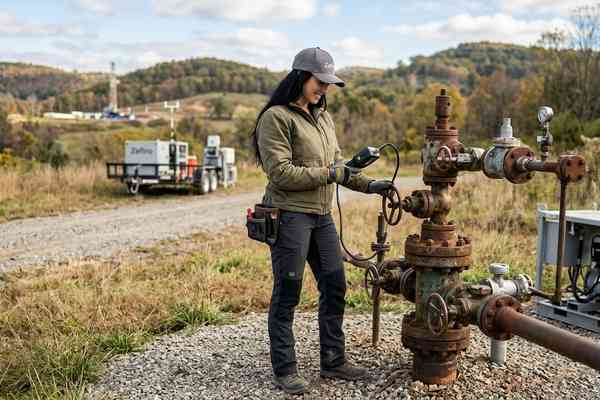
On October 19, Zefiro Methane reported an order backlog of around USD 40 million in government-funded projects, with work scheduled to continue through June 2029. The company expects to generate USD 4.9 million in revenue in the current quarter, with the remaining USD 34.6 million expected to be recognised primarily in 2027 and 2028. The largest individual contract is a USD 19.6 million award from the Ohio Department of Natural Resources covering approximately 200 wells. The company has also secured a separate assessment contract from the agency in southeastern Ohio to evaluate orphaned wells, prepare sites and expose wellheads. Contracts from companies in the oil and gas industry are not even included in the total yet. The order book is well filled.
On September 28, the company presented its figures for the financial year ended June 30. Revenue rose 31.1% to around USD 42.5 million, up from USD 32.4 million the previous year. Gross profit increased by 66.0% to USD 12.4 million, while the gross margin improved to 29.2% from 23.0%. At the same time, operating expenses fell 10.2% to just under USD 14.4 million. Adjusted EBITDA turned positive at USD 3.75 million from a loss of around USD 4 million. The company has therefore increased revenue and margin at the same time. Operationally, things are going well.
The company is active in an increasing number of US states. On September 22, the company launched operations in Indiana and Michigan, with its first underground carbon dioxide storage project. The project in eastern Indiana has a contract value of around USD 750,000, with an emergency operation worth around USD 500,000 added in Michigan. The USD 11.5 million contract, which runs through June 2029, also starts in November. Fresh capital came in on October 23 through a CAD 5 million private placement. Notably, the financing took place above the current share price of CAD 0.63, at CAD 0.66 per unit with a half warrant at CAD 0.80. The company is well positioned to benefit commercially from efforts to address the oil and gas industry's legacy liabilities.
BP: Debt Declines as Legacy Liabilities Are Being Addressed
On October 13, BP prepared investors for the 3rd quarter. Net debt is expected to be USD 13.5 to 14.5 billion as at September 30, compared with USD 22.3 billion at the end of June. The repayment of USD 1.0 billion in hybrid bonds on September 30 contributes to the reduction. Including hybrid bonds, leases and obligations in the Gulf of America, the total falls by USD 9.0 to 10.0 billion compared with the 2nd quarter. The group will present its figures on October 30. The debt picture is brightening.
Refineries are providing a tailwind. Realised margins are expected to improve the Products segment result by USD 1.9 billion to USD 2.1 billion compared with the second quarter. The benchmark margin averaged USD 46.7 per barrel, up from USD 29.6 in the previous quarter. Production is expected to be 2,190 to 2,240 mboe/d, compared with 2,201 mboe/d in the 2nd quarter. For the full year, the group is planning for 2,180 to 2,270 mboe/d. Earnings in the Customers segment, by contrast, are weaker due to lower fuel margins and higher base oil prices at Castrol. On balance, this offsets much of the impact.
There are also legacy liabilities. BP expects after-tax impairments of USD 3.0 to 4.5 billion for the third quarter, mainly in the transition business of the Gas & Low Carbon Energy segment. They do not weigh on adjusted earnings because they are treated as exceptional items. How much of a burden will the group shed as a result? More details are expected on October 30, with the new strategy to be presented in New York on December 15. If BP can further streamline its balance sheet, it could gain greater financial flexibility to focus on its core business.
Conclusion
The oil industry has two faces. It makes money from today's business while still having to clean up yesterday's legacy liabilities. Shell relies on strong refining margins and is expanding the gas business with ARC and LNG Canada, but must keep an eye on a weaker chemicals division. Zefiro Methane has secured a project backlog extending through June 2029, is growing revenue and margins, and is expanding into new markets. BP is reducing its debt, while its refining operations are providing a boost. Environmental remediation remains a business driven by factors beyond oil prices alone.
Conflict of interest
Pursuant to §85 of the German Securities Trading Act (WpHG), we point out that Apaton Finance GmbH as well as partners, authors or employees of Apaton Finance GmbH (hereinafter referred to as "Relevant Persons") currently hold or hold shares or other financial instruments of the aforementioned companies and speculate on their price developments. In this respect, they intend to sell or acquire shares or other financial instruments of the companies (hereinafter each referred to as a "Transaction"). Transactions may thereby influence the respective price of the shares or other financial instruments of the Company.
In this respect, there is a concrete conflict of interest in the reporting on the companies.
In addition, Apaton Finance GmbH is active in the context of the preparation and publication of the reporting in paid contractual relationships.
For this reason, there is also a concrete conflict of interest.
The above information on existing conflicts of interest applies to all types and forms of publication used by Apaton Finance GmbH for publications on companies.
Risk notice
Apaton Finance GmbH offers editors, agencies and companies the opportunity to publish commentaries, interviews, summaries, news and the like on news.financial. These contents are exclusively for the information of the readers and do not represent any call to action or recommendations, neither explicitly nor implicitly they are to be understood as an assurance of possible price developments. The contents do not replace individual expert investment advice and do not constitute an offer to sell the discussed share(s) or other financial instruments, nor an invitation to buy or sell such.
The content is expressly not a financial analysis, but a journalistic or advertising text. Readers or users who make investment decisions or carry out transactions on the basis of the information provided here do so entirely at their own risk. No contractual relationship is established between Apaton Finance GmbH and its readers or the users of its offers, as our information only refers to the company and not to the investment decision of the reader or user.
The acquisition of financial instruments involves high risks, which can lead to the total loss of the invested capital. The information published by Apaton Finance GmbH and its authors is based on careful research. Nevertheless, no liability is assumed for financial losses or a content-related guarantee for the topicality, correctness, appropriateness and completeness of the content provided here. Please also note our Terms of use.