June 25th, 2026 | 07:25 CEST
GOLD PRICE ON A DOWNWARD TREND! WHY GLOBEX MINING, Q-GOLD, AND ALAMOS ARE STILL SHINING
The gold price has recently dropped noticeably, and this immediately raises the question of what this means for mining companies. There is no one-size-fits-all answer; it all depends on the individual company's story. Those who secure the right deposits early and at a low cost, those who reliably manage their production, or those who participate in third-party projects without owning a mine of their own, can still earn handsomely even at prices of USD 4,000 per ounce. This is precisely what connects three companies: the up-and-coming explorer Q-Gold, the established producer Alamos Gold, and Globex Mining Enterprises, a debt-free royalty company that derives its income from licensing rights. Three different ways to profit from the precious metals shortage—and three good reasons to take a closer look at them at current prices.
time to read: 6 minutes
|
Author:
Jens Castner
ISIN:
GLOBEX MINING ENTPRS INC. | CA3799005093 | TSX: GMX. OTCQX: GLBXF , Q-GOLD RES | CA7472695047 , ALAMOS GOLD (NEW) | CA0115321089
Table of contents:
Author
Jens Castner
The Nuremberg native brings over three decades of capital markets experience, backed by a career shaped by deep market insight and a genuine passion for investing. His journey began in 1994 through an investment club among colleagues – a formative experience that sparked a lifelong dedication to identifying compelling investment opportunities.
Following senior editorial roles at Nürnberger Nachrichten, €uro am Sonntag, and €uro, he went on to serve as Editor-in-Chief of the renowned investor magazine Börse Online from 2014, where he played a key role in shaping high-quality financial journalism for a broad investor audience.
Tag cloud
Shares cloud
A Hands-On Professional with a Plan
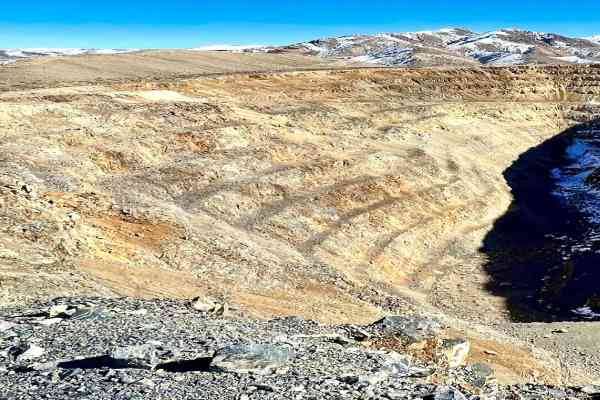
Anyone who listens to Andreas Rompel quickly realizes this is no theorist speaking. A native of Germany, he holds a Ph.D. in geology and has spent more than 35 years in mines around the world. Today, he is COO at Q-Gold Resources, a small Canadian exploration company with big ambitions. The heart of the company, however, is not in Canada but in the US state of Oregon, not far from the border with Nevada, the most important gold-mining region in the US. The Quartz Mountain Gold project was acquired in October 2025 from Alamos Gold, one of North America's largest gold producers. Rompel's assessment is clear: "This is no longer an exploration project—we are at least two stages further along."
Alamos had never really tackled the site, partly because mining permits were hard to come by in Oregon for a long time. Q-Gold seized this opportunity and submitted its applications through the US federal FAST-41 framework, a program designed to expedite the approval of infrastructure and mining projects. Discussions with forestry authorities and high-ranking politicians have already taken place; the political tailwind is real. Along with the project, Q-Gold also acquired the Exploration Warehouse, a storage and analysis center for drill cores and rock samples located directly off a highway and equipped with a reliable power supply. It is rare to start building a mine with such excellent resources.
What the Mountain Has to Offer
What Q-Gold has discovered on Quartz Mountain is quite impressive. More than 90,000 m of diamond drilling data are available; the current mineral resource, as defined by the strict Canadian NI 43-101 standard, shows 2.01 million ounces of gold in the "Indicated" category at an average grade of 0.78 grams per metric ton (g/t) of rock, plus an additional 494,000 ounces in the less certain "Inferred" category. With a mine life of 14 years and an average annual production of 135,000 ounces, approximately 1.9 million ounces of gold are expected to be produced over the entire project life at a cost of USD 1,216 per ounce. The preliminary economic assessment (PEA) by the renowned engineering firm Kappes, Cassiday & Associates arrives at a net present value of USD 1.7 billion based on a conservative base gold price of USD 3,265 per ounce. At a share price of CAD 0.21 (currently EUR 0.12 in Germany), however, Q-Gold is valued at just around CAD 40 million.
Another key asset is the neighbouring Angel's Camp, where near-surface gold grades of up to 160.6 g/t have been measured—the extent is limited, but the potential is undisputed. Rompel nevertheless sets clear priorities: "We will not leave Angel's Camp behind, but we will unearth that treasure later." Quartz Mountain will be developed first; the first gold bars are scheduled to be cast in 2030. The only obstacle is the USD 290 million in capital expenditure (CAPEX)—a hefty sum for a company with only CAD 10 million in the bank. Nevertheless, financing appears feasible: Canada's major banks have traditionally been open to the mining sector, and with former executives from the Bank of Montreal and the mining-experienced investment firm Forbes & Manhattan on its executive and supervisory boards, Q-Gold is exceptionally well-connected.
The Heavyweight Partner
Beyond this network, Q-Gold has a prominent advocate: Alamos Gold holds a 9.9% stake and has appointed its own representative, Scott Parsons, to the board of directors—a quiet but clear commitment to the project. Alamos did not divest Quartz Mountain because it is worthless, but because a corporation with a market capitalization of nearly CAD 20 billion simply has other priorities; it would benefit from the project's success through its stake in the project anyway. Unlike the small-cap explorer, Alamos is no longer a hidden gem, but an established Canadian gold producer with mines in Ontario and Mexico. A look at the latest figures shows just how well business has been going recently.
With a gold price of USD 4,829 per ounce still achievable in the first quarter, revenue climbed 79% between early January and late March compared to the same period last year, reaching a record high of USD 597 million. Free cash flow, which was still slightly negative in the same quarter of the previous year, turned positive at USD 102 million. Despite comparatively high production costs of USD 1,862 per ounce, the current gold price yields a margin of more than USD 2,000 per ounce produced. Although the annual dividend was increased by 60%, it remains modest at USD 0.04 per quarter, given a share price of USD 30.88 (EUR 26.81 or CAD 43.50).
More Than Just One Path to Gold
For investors, however, the future is more interesting than looking back. In February 2026, Alamos announced the expansion of the Island Gold District in Ontario to 20,000 metric tonnes per day, with mineral reserves rising by 32% to 15.9 million ounces. By 2030, annual production is expected to grow to around 1 million ounces—an 83% increase over 2025—while production costs are projected to fall below USD 1,250 per ounce. This means that the company, which—like its partner Q-Gold—is based in Toronto, is structurally well-positioned for the next decade. Nevertheless, exploration and mining remain risky ventures: some companies wait for permits and investors, while others maintain capital-intensive shafts and mining facilities. However, there is another way to profit from mining projects without exposing oneself to these uncertainties.
Globex Mining Enterprises has perfected precisely this business model. The company, based in Rouyn-Noranda, Québec, does not mine gold itself or operate any mines; instead, it systematically removes mining risks from its own balance sheet. The management team led by CEO Jack Stoch—himself a geologist with decades of experience—acquires stakes at low cost in historically proven mining regions—"world-class mining camps," as the CEO emphasizes. Globex enhances the value of these areas through limited in-house exploration and then transfers them to external partners in exchange for cash payments, shares, and long-term licensing agreements—so-called royalty rights. This generates ongoing value without the company having to engage in capital-intensive mining itself.
Mining Without Excavators
The result is a portfolio of 272 mineral assets, ranging from gold and silver to copper, zinc, antimony, rare earth elements, and lithium. The geographic focus is exclusively on politically stable regions such as Québec, Ontario, New Brunswick, Nevada, and Arizona; one licensed area is even located in Bräunsdorf, Saxony, within the historic Freiberg silver mining district, where mining has been taking place for around 850 years. There are now 107 active royalty agreements. The stock's price history proves that the model works. Since 2016, Globex's stock has risen by more than 380%, more than twice as much as the Canadian TSX Composite Index. This makes it all the more remarkable that, at the current price of CAD 1.85 (EUR 1.16), its market capitalization of approximately CAD 110 million lags far behind comparable royalty companies—Altius Minerals, for example, is valued at around CAD 3.3 billion, and Triple Flag paid approximately CAD 421 million for its smaller competitor Orogen Royalties.
Underpinning this is also an extremely solid balance sheet. Globex operates without any debt. At the end of the first quarter, the company had cash and cash equivalents of CAD 8 million and working capital—that is, short-term operating capital—of just under CAD 40 million. Option payments from partners—CAD 581,000 in the first quarter alone—fully finance day-to-day operations. However, the real source of leverage is the royalty portfolio, which gains value with every resource update. One example is Bell Mountain in Nevada, where Lincoln Mining plans to begin production by 2027 at the latest—using the cost-effective heap-leaching process, in which crushed ore is placed in piles and doused with a weak cyanide solution that extracts gold. Globex is entitled to 3% of the gross proceeds, and at the current gold price of USD 4,063 per ounce, the first substantial royalty cash flows from this project are beginning to materialize. This allows investors to benefit from the global demand for raw materials and the scarcity of precious metals without bearing an explorer's drilling risk or a producer's capital intensity—all without lifting a finger themselves.
Conflict of interest
Pursuant to §85 of the German Securities Trading Act (WpHG), we point out that Apaton Finance GmbH as well as partners, authors or employees of Apaton Finance GmbH (hereinafter referred to as "Relevant Persons") may hold shares or other financial instruments of the aforementioned companies in the future or may bet on rising or falling prices and thus a conflict of interest may arise in the future. The Relevant Persons reserve the right to buy or sell shares or other financial instruments of the Company at any time (hereinafter each a "Transaction"). Transactions may, under certain circumstances, influence the respective price of the shares or other financial instruments of the Company.
In addition, Apaton Finance GmbH is active in the context of the preparation and publication of the reporting in paid contractual relationships.
For this reason, there is a concrete conflict of interest.
The above information on existing conflicts of interest applies to all types and forms of publication used by Apaton Finance GmbH for publications on companies.
Risk notice
Apaton Finance GmbH offers editors, agencies and companies the opportunity to publish commentaries, interviews, summaries, news and the like on news.financial. These contents are exclusively for the information of the readers and do not represent any call to action or recommendations, neither explicitly nor implicitly they are to be understood as an assurance of possible price developments. The contents do not replace individual expert investment advice and do not constitute an offer to sell the discussed share(s) or other financial instruments, nor an invitation to buy or sell such.
The content is expressly not a financial analysis, but a journalistic or advertising text. Readers or users who make investment decisions or carry out transactions on the basis of the information provided here do so entirely at their own risk. No contractual relationship is established between Apaton Finance GmbH and its readers or the users of its offers, as our information only refers to the company and not to the investment decision of the reader or user.
The acquisition of financial instruments involves high risks, which can lead to the total loss of the invested capital. The information published by Apaton Finance GmbH and its authors is based on careful research. Nevertheless, no liability is assumed for financial losses or a content-related guarantee for the topicality, correctness, appropriateness and completeness of the content provided here. Please also note our Terms of use.