September 4th, 2026 | 09:35 CEST
Elon Musk Sounds the Energy Alarm! Musk Goes After GE Vernova and Siemens Energy – Thiel Bets on Vistra, RE Royalties a Takeover Target
Musk sounds the energy alarm. He warns of a full-blown energy crisis driven by the expansion of data centres. As early as next year, there could be a power shortfall equivalent to the amount needed to supply the Netherlands. Typical of Musk, he is actively tackling the challenges and encroaching on the territory of Siemens Energy and GE Vernova. He plans to take over the mobile power plant operator APR Energy and manufacture critical gas turbine components himself. RE Royalties is also a potential takeover target. The Canadian company finances developers of solar, wind, battery storage and other renewable energy projects, securing long-term royalties in return. Its planned partnership with Solaris Energy is set to expand its US business significantly. Prominent investors are also increasingly betting on the AI industry's growing appetite for electricity. Peter Thiel and Ray Dalio have invested in Vistra.
time to read: 5 minutes | Author: Fabian Lorenz
ISIN: RE ROYALTIES LTD | CA75527Q1081 | TSXV: RE , OTCQX: RROYF , SIEMENS ENERGY AG NA O.N. | DE000ENER6Y0 , VISTRA CORP. DL-_01 | US92840M1027 , GE VERNOVA INC | US36828A1016 | NYSE: GEV
Table of contents:
Author

Fabian Lorenz
For more than twenty years, the Cologne native has been intensively involved with the stock market, both professionally and privately. He is particularly passionate about national and international small and micro caps.
Tag cloud
Shares cloud
Musk Sounds The Energy Alarm
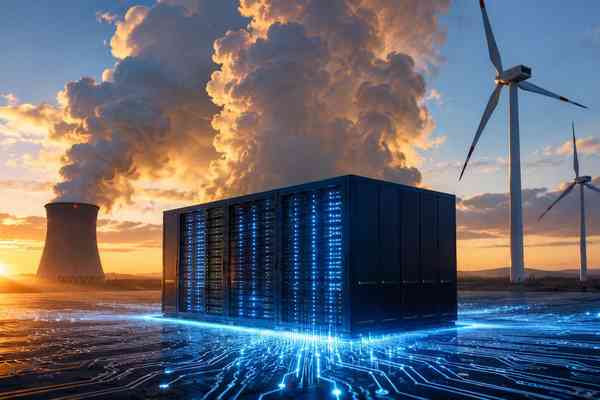
Musk sounds the energy alarm. The AI boom is at risk of running out of electricity. Elon Musk is warning of a full-blown energy crisis as data centres expand. In his view, the production of high-performance AI chips is growing much faster than the electricity supply required to power them. As early as 2027, there could be a shortfall of at least 15 gigawatts of power needed simply to operate the additional AI chips being produced. This exceeds the annual electricity consumption of the Netherlands. As a result, energy is increasingly becoming the bottleneck of the AI revolution. Billions invested in new data centres alone are no longer nearly enough.
Without additional power stations, grids, transformers and turbines, the expansion risks stalling. Musk is actively tackling these challenges and is moving into the domain of Siemens Energy and GE Vernova. For instance, he plans to acquire the mobile power plant operator APR Energy. Furthermore, SpaceX intends to enter the production of critical gas turbine components. In Texas, the company plans to operate its own foundry for gas turbine blades and guide vanes. According to Musk, in-house production could speed up the delivery of new gas turbines by up to 18 months.
For now, the main focus is likely to be on supplying its own data centres with electricity more quickly. However, this move highlights just how valuable gas turbines and their components have become, and explains why Siemens Energy and GE Vernova are currently securing record orders.
Renewable Energy Also In Demand In The US
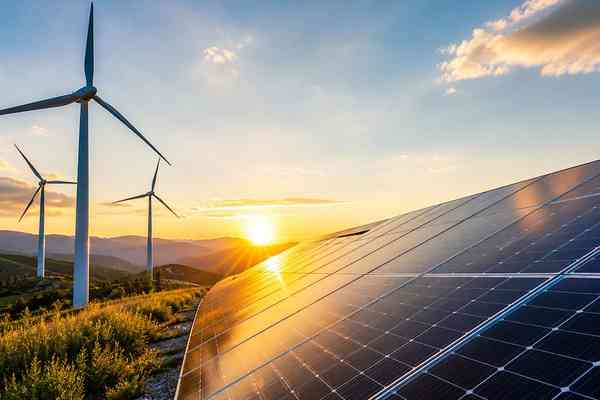
While gas-fired power stations are currently perceived by the public as the hyperscalers' first choice, renewable energy and battery storage capacities are also on the rise. According to the US Energy Information Administration (EIA), a total of 86 GW of new power station capacity is set to come online in 2026 – more than ever before. Of this, 43.4 GW will come from solar energy, 24 GW from battery storage and 11.8 GW from wind power. New gas-fired power stations will account for only around 6.3 GW. Solar power is developing particularly rapidly. By the end of June 2026, the US already had around 227 GW of installed solar capacity, some 35 GW more than a year earlier. At the same time, solar power generation in the first half of 2026 was almost 20% higher than in the same period the previous year. Battery storage is also being expanded rapidly and is intended to help integrate the highly fluctuating output from solar and wind power more effectively into the electricity grid.
Tesla and SpaceX are also heavily investing in renewable energy, particularly solar power and battery storage. Musk has announced plans to massively expand solar capacity, while Tesla, with its Megapack large-scale storage systems, already plays a central role in stabilizing electricity grids and supplying energy-intensive applications.
RE Royalties: Expanding in the US and a Potential Takeover Target
RE Royalties also aims to capitalize on the exploding demand for electricity in the US. The Canadian company does not operate its own power stations, but instead finances developers of solar, wind, battery storage and other renewable energy projects, securing long-term, revenue-based royalties in return.
Most recently, there were reports of an expansion of the collaboration with Solaris Energy. RE Royalties is investing a further USD 1 million in royalties for a portfolio of 16 decentralized solar projects in the US, with a total capacity of around 15.24 MW. This brings the total investment in the Solaris portfolio to date to USD 4.8 million. At the same time, both companies have signed a non-binding letter of intent regarding a possible extension of their financing partnership to a total of up to USD 67.5 million. This includes, in addition to the USD 4.8 million already invested, a further USD 13.7 million for 13 solar projects totalling around 48 MW, as well as a potential USD 49 million for 83 development projects totalling around 142 MW. The terms of the Solaris royalties are adjusted in each financing round to ensure that RE Royalties achieves an agreed-upon minimum return for an initial 25-year period. Thereafter, payments continue for the remaining operational life of the projects.
At the same time, RE Royalties confirmed progress on the strategic review launched in March. Together with PwC, the Board is examining, amongst other things, a possible sale of the entire company, strategic partnerships, co-investments and new equity or debt financing. According to the company, discussions with various interested parties have already taken place and are continuing, although no conclusion can be reported at this stage.
The share price has been trading sideways since April this year. This is unlikely to last long. The market capitalization stands at under CAD 20 million.
https://youtu.be/5dQvcZkFR7E?si=jx0IeY-Wu7Cfqgm6
Peter Thiel and Ray Dalio Backing Vistra
Prominent investors are now also banking on the AI industry's appetite for electricity. In recent months, Vistra has been the focus of attention. Peter Thiel's investment company, Thiel Macro, reported holding approximately 373,000 Vistra shares valued at just over USD 59 million as at June 30, 2026. This position accounted for around 14% of the disclosed US share portfolio. It is noteworthy that Thiel has simultaneously taken stakes in several other US energy suppliers, such as American Electric Power, DTE Energy and FirstEnergy. Bridgewater Associates, led by star investor Ray Dalio, also held around 752,000 Vistra shares worth just under USD 120 million at the end of June. These holdings show that it is not only technology shares that are in the spotlight during the AI boom.
The AI boom is increasingly becoming an energy boom. Siemens Energy and GE Vernova are benefiting from the demand for turbines, grids and power station technology. Elon Musk demonstrates that the shortage can, however, also backfire on the big players. The investments made by investors such as Peter Thiel and Ray Dalio in electricity producers like Vistra are interesting. RE Royalties, in turn, offers indirect exposure to the expansion of renewable energy and, in addition, the potential for a takeover. One thing is clear: investors looking to capitalize on the AI boom should no longer be focusing solely on chips and data centres.
Conflict of interest
Pursuant to §85 of the German Securities Trading Act (WpHG), we point out that Apaton Finance GmbH as well as partners, authors or employees of Apaton Finance GmbH (hereinafter referred to as "Relevant Persons") may hold shares or other financial instruments of the aforementioned companies in the future or may bet on rising or falling prices and thus a conflict of interest may arise in the future. The Relevant Persons reserve the right to buy or sell shares or other financial instruments of the Company at any time (hereinafter each a "Transaction"). Transactions may, under certain circumstances, influence the respective price of the shares or other financial instruments of the Company.
In addition, Apaton Finance GmbH is active in the context of the preparation and publication of the reporting in paid contractual relationships.
For this reason, there is a concrete conflict of interest.
The above information on existing conflicts of interest applies to all types and forms of publication used by Apaton Finance GmbH for publications on companies.
Risk notice
Apaton Finance GmbH offers editors, agencies and companies the opportunity to publish commentaries, interviews, summaries, news and the like on news.financial. These contents are exclusively for the information of the readers and do not represent any call to action or recommendations, neither explicitly nor implicitly they are to be understood as an assurance of possible price developments. The contents do not replace individual expert investment advice and do not constitute an offer to sell the discussed share(s) or other financial instruments, nor an invitation to buy or sell such.
The content is expressly not a financial analysis, but a journalistic or advertising text. Readers or users who make investment decisions or carry out transactions on the basis of the information provided here do so entirely at their own risk. No contractual relationship is established between Apaton Finance GmbH and its readers or the users of its offers, as our information only refers to the company and not to the investment decision of the reader or user.
The acquisition of financial instruments involves high risks, which can lead to the total loss of the invested capital. The information published by Apaton Finance GmbH and its authors is based on careful research. Nevertheless, no liability is assumed for financial losses or a content-related guarantee for the topicality, correctness, appropriateness and completeness of the content provided here. Please also note our Terms of use.