November 9th, 2026 | 05:32 CET
Daimler Truck, First Hydrogen and Ballard Power: The radical upheaval in global logistics
The global logistics industry is facing a massive upheaval. While established truck manufacturers earn billions from conventional powertrains, the development of zero-emission commercial vehicles is gathering pace. Fuel cells, hydrogen supply and automated logistics systems could fundamentally change the value chain. For investors, the question is who can actually turn the industrial transformation into a profitable business.
time to read: 4 minutes | Author: Stefan Feulner
ISIN: First Hydrogen Corp | CA32057N1042 , Daimler Truck Holding AG | DE000DTR0013 , BALLARD PWR SYS | CA0585861085
Table of contents:
Author

Stefan Feulner
The native Franconian has more than 20 years of stock exchange experience and a broadly diversified network.
He is passionate about analyzing a wide variety of business models and investigating new trends.
Tag cloud
Shares cloud
Daimler Truck – Profits Up 73%, Yet the Market Punishes the Stock
A 73% jump in profit, a strong recovery in the US business, and almost EUR 1 billion in free cash flow. These figures should have investors excited about Daimler Truck. Yet following the publication of the quarterly results, the shares fell by more than 8% at one point. However, the sell-off was driven less by the figures than by the outlook.
Adjusted operating profit for the Group rose to EUR 1.124 billion, while revenue in the industrial business increased by 20% to EUR 11.6 billion. The recovery in North America was strong. There, adjusted EBIT climbed by 169% to EUR 691 million. The operating margin reached 12.1%.
However, the most important market delivered weaker-than-expected results in terms of the outlook. Order intake in North America fell about 16% short of analysts' expectations. Investors therefore fear that earnings momentum could weaken in 2027.
At the same time, Daimler Truck is investing in the next generation of powertrains. Battery-electric models such as the eActros and hydrogen-based concepts are intended to prepare the Group for stricter emissions requirements. The challenge is to scale these technologies economically without jeopardising the profitability of the existing business.
Analysts' assessments differ accordingly. While RBC confirmed Outperform with a price target of EUR 63 and Jefferies maintained Buy with EUR 54, Bernstein continues to take a critical view of the shares. The firm reiterated Underperform with a price target of EUR 39.
First Hydrogen – 36 patents and the next big step in robotics
More than 630 km of range on one hydrogen fill-up and around 6,000 test km. First Hydrogen has already gained practical experience with its fuel cell vans. Now the Canadian technology company is expanding its business into robotics and autonomous systems. On November 2, the TSX Venture Exchange approved the planned acquisition of a 60% stake in Exodus Actuation Solutions.
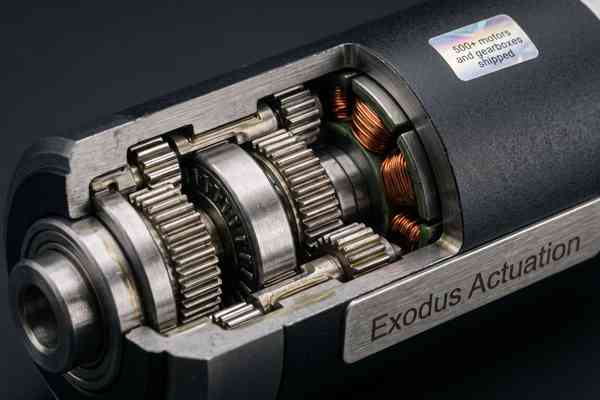
The company, referred to as RoboticsCo, owns or licenses 26 granted patents and 10 patent applications for high-performance motors, gearboxes and robotic actuators. According to the company, more than 500 components have already been manufactured and delivered. The technologies have been tested and deployed by companies in the robotics, automotive and packaging industries.
The systems are intended to enable greater precision, performance and energy efficiency in a smaller size. Applications range from humanoid robots and industrial automation to logistics. For the stake, the agreement provides for 2 million new First Hydrogen shares and investments totalling USD 2 million to be provided, each in several stages.
Weeks ago, First Hydrogen announced another technological milestone. Construction of a modular unmanned ground vehicle platform was completed. The system features specialised wheel technology, adaptable payload modules and an integrated drone launcher. First Hydrogen holds exclusive worldwide rights to the underlying patented technology.
With its newly established subsidiary First Humanoid, the company is bringing together its activities in robotics, artificial intelligence and autonomous systems. At the same time, the two hydrogen vans tested in Great Britain remain part of the technology portfolio.
First Hydrogen is therefore opening up additional business areas in industrial automation, logistics and robotics alongside zero-emission mobility. The combination of existing technology, patent rights and already tested components creates a basis for further commercialisation.
Ballard Power – Hydrogen bus enters series production: the technology is coming of age
The decisive advance is taking place not in the research laboratory, but in vehicle production. Ballard Power Systems is deploying its new FCmove-SC fuel cell generation in a series-production vehicle for the first time. The Canadian company announced that the technology is being used in the new Solaris Urbino 12 Hydrogen.
The technical improvements are enormous. Ballard says volumetric power density has increased by 57%. At the same time, the number of components has been reduced by 40%. This is intended to simplify integration into vehicles and reduce maintenance requirements and operating costs.
The system delivers up to 80 kW of power and, according to the manufacturer, achieves a maximum efficiency of 57%. The specified service life is more than 25,000 operating hours. A cold start is said to be possible even at temperatures of minus 30 degrees Celsius.
The technology is entering a market in which Ballard has already gained extensive experience. According to the company, more than 2,500 fuel cell buses with Ballard technology are on the road worldwide. Together, they have covered over 300 million km.
Despite this progress, the shares have fallen significantly in recent trading days, and analysts also disagree on the valuation. BMO Capital confirmed its negative assessment with a price target of USD 1.50. Susquehanna, by contrast, reiterated a Neutral rating with a USD 2.00 price target. The scepticism makes clear that technological successes are no guarantee of sustainably profitable unit volumes.
Ballard is also expanding its offering to include services for ongoing fleet operations. Fleet360 is intended to enable operators to better monitor the maintenance, performance and availability of their vehicles.
Conclusion
Daimler Truck's jump in profits demonstrates the earnings potential of the traditional commercial vehicle business. Ballard Power is bringing a new generation of fuel cells into series production and strengthening its position in zero-emission local transport. First Hydrogen is pursuing a broader technological approach: alongside proven hydrogen-powered vans, the planned robotics investment opens up additional prospects in automation and logistics. This creates different approaches to benefiting from technological change in the transport sector.
Conflict of interest
Pursuant to §85 of the German Securities Trading Act (WpHG), we point out that Apaton Finance GmbH as well as partners, authors or employees of Apaton Finance GmbH (hereinafter referred to as "Relevant Persons") currently hold or hold shares or other financial instruments of the aforementioned companies and speculate on their price developments. In this respect, they intend to sell or acquire shares or other financial instruments of the companies (hereinafter each referred to as a "Transaction"). Transactions may thereby influence the respective price of the shares or other financial instruments of the Company.
In this respect, there is a concrete conflict of interest in the reporting on the companies.
In addition, Apaton Finance GmbH is active in the context of the preparation and publication of the reporting in paid contractual relationships.
For this reason, there is also a concrete conflict of interest.
The above information on existing conflicts of interest applies to all types and forms of publication used by Apaton Finance GmbH for publications on companies.
Risk notice
Apaton Finance GmbH offers editors, agencies and companies the opportunity to publish commentaries, interviews, summaries, news and the like on news.financial. These contents are exclusively for the information of the readers and do not represent any call to action or recommendations, neither explicitly nor implicitly they are to be understood as an assurance of possible price developments. The contents do not replace individual expert investment advice and do not constitute an offer to sell the discussed share(s) or other financial instruments, nor an invitation to buy or sell such.
The content is expressly not a financial analysis, but a journalistic or advertising text. Readers or users who make investment decisions or carry out transactions on the basis of the information provided here do so entirely at their own risk. No contractual relationship is established between Apaton Finance GmbH and its readers or the users of its offers, as our information only refers to the company and not to the investment decision of the reader or user.
The acquisition of financial instruments involves high risks, which can lead to the total loss of the invested capital. The information published by Apaton Finance GmbH and its authors is based on careful research. Nevertheless, no liability is assumed for financial losses or a content-related guarantee for the topicality, correctness, appropriateness and completeness of the content provided here. Please also note our Terms of use.