October 8th, 2026 | 07:45 CEST
Amprius Technologies, HPQ Silicon, Kratos Defense: This Technology Is Revolutionizing the Military
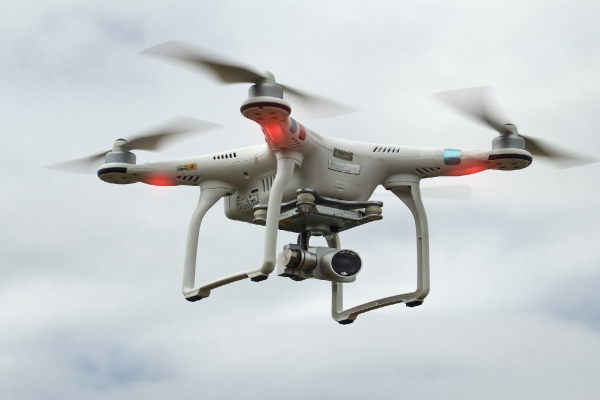
Drones are transforming modern warfare, and suddenly, the battery determines range, payload, and mission duration. As a result, the US is investing millions in new high-performance cells and domestic manufacturing capacity. Silicon anodes could represent a decisive technological leap, promising significantly higher energy densities than traditional graphite anodes. The race is already on. While major defense contractors ramp up production of unmanned systems, battery developers are striving to pack the necessary energy into the lightest possible package.
time to read: 4 minutes
|
Author:
Stefan Feulner
ISIN:
HPQ SILICON INC | CA40444L1031 | TSXV: HPQ , OTCQB: HPQFF , KRATOS DEF.+SEC.NEW DL001 | US50077B2079 , AMPRIUS TECHNOLOGIES INC | US03214Q1085 | NYSE: AMPX
Table of contents:
Author

Stefan Feulner
The native Franconian has more than 20 years of stock exchange experience and a broadly diversified network.
He is passionate about analyzing a wide variety of business models and investigating new trends.
Tag cloud
Shares cloud
Amprius Technologies: America Invests Millions in the Super Battery
Amprius Technologies is moving forward with the expansion of its US battery production. CAMINUS will manufacture pouch cells developed by Amprius in Indianapolis. Production is set to ramp up gradually to serve customers in the aviation, defense, and unmanned systems sectors. This lets Amprius expand its US manufacturing capacity without building a completely new factory.
Even more significant is a second development. In late September, Amprius received a grant of up to USD 75 million from the US Department of Defense. The funds will be used to convert an existing US production line for electric vehicle batteries to manufacture high-energy cells for small drones. Upon completion in early 2028, the facility is expected to have an annual production capacity of up to 12 million Amprius cells. The total project is estimated at approximately USD 100 million.
Amprius replaces traditional graphite anodes with silicon solutions to achieve higher energy densities. Especially with drones, every gram counts. More stored energy can enable longer flight times, greater ranges, or higher payloads.
The fact that Washington is funding this sector in particular underscores its strategic importance. The US wants not only better batteries but also a domestic, NDAA-compliant supply chain. Amprius is thus set to evolve from a technology developer into a mass supplier for the booming drone market. The key question now is whether the ramp-up will be successful.
HPQ Silicon: The Technology Is Now Making Its Way into the Military
HPQ Silicon is also making inroads into this market. Through its 36.8% stake in Novacium, the company is developing silicon-based anode materials as well as high-performance cells and complete battery systems. However, technology alone is no longer the decisive factor. Instead, Novacium has begun integrating its batteries into specific military applications.
The first major step came in the form of a commercial order for GEN3 battery packs for FPV drones intended for a French army regiment. Prototypes had previously been tested by the end customer. HPQ emphasized that while the order is not yet significant financially, it is strategically interesting. For the first time, laboratory tests and qualification have led to a commercial defense application.
Meanwhile, the next area is taking shape. The French Army's technical department, STAT, commissioned Novacium to develop and supply prototype batteries for tactical radios. The goal is ambitious: significantly increase, or possibly even double, energy capacity without modifying existing connectors, chargers, or interfaces. To achieve this, the high-capacity GEN3 and GEN4 cells will be used. The prototypes are to be tested under real-world operational conditions.
This makes the story even more interesting for HPQ. Silicon anodes are no longer just expected to deliver better lab results, but to solve the problems of longer drone flight times and extended operational durations for military electronics.
If, following the initial orders, the company succeeds in moving to larger-scale production, this technological validation could give rise to a scalable business. The global race for high-performance, as independent as possible battery supply chains plays right into HPQ's hands.
Kratos Defense: The Drone Boom Reaches the Next Level
Kratos Defense illustrates just how large the market for new military technologies is becoming. In early October, the US defense specialist announced new orders worth more than USD 100 million for space and cyber missions. Among other things, the systems are designed to detect and process complex radio signals and support military decision-making and targeting processes. To do so, Kratos draws on its global KnownSpace network, which comprises more than 190 sensors.
Above all, however, Kratos represents a fundamental shift in the defense industry. In addition to traditional missile and satellite systems, the company is developing unmanned systems, propulsion systems, and autonomous platforms. The best-known example is the XQ-58A Valkyrie, which was developed as a relatively cost-effective unmanned combat aircraft.
The logic behind this is to transform the defense market. Instead of relying exclusively on a few extremely expensive platforms, the plan is to deploy larger numbers of unmanned systems in the future. As a result, cost, scalable production, and available supply chains are becoming increasingly important.
This brings us full circle to battery technology. Smaller electric reconnaissance, FPV, and attack drones require energy storage systems that are as lightweight as possible and have high energy density. As production volumes increase, so does the need for high-performance and geopolitically secure battery supply chains.
Amprius is already showing the way forward. Washington is funding new domestic production capacity for millions of high-energy cells. Meanwhile, HPQ Silicon and Novacium are attempting to establish themselves in Europe with silicon anodes, their own cells, and initial military applications. Kratos, meanwhile, represents the massive expansion of unmanned and autonomous defense systems. The race for the better drone could therefore increasingly become a race for the better battery.
Conflict of interest
Pursuant to §85 of the German Securities Trading Act (WpHG), we point out that Apaton Finance GmbH as well as partners, authors or employees of Apaton Finance GmbH (hereinafter referred to as "Relevant Persons") may hold shares or other financial instruments of the aforementioned companies in the future or may bet on rising or falling prices and thus a conflict of interest may arise in the future. The Relevant Persons reserve the right to buy or sell shares or other financial instruments of the Company at any time (hereinafter each a "Transaction"). Transactions may, under certain circumstances, influence the respective price of the shares or other financial instruments of the Company.
In addition, Apaton Finance GmbH is active in the context of the preparation and publication of the reporting in paid contractual relationships.
For this reason, there is a concrete conflict of interest.
The above information on existing conflicts of interest applies to all types and forms of publication used by Apaton Finance GmbH for publications on companies.
Risk notice
Apaton Finance GmbH offers editors, agencies and companies the opportunity to publish commentaries, interviews, summaries, news and the like on news.financial. These contents are exclusively for the information of the readers and do not represent any call to action or recommendations, neither explicitly nor implicitly they are to be understood as an assurance of possible price developments. The contents do not replace individual expert investment advice and do not constitute an offer to sell the discussed share(s) or other financial instruments, nor an invitation to buy or sell such.
The content is expressly not a financial analysis, but a journalistic or advertising text. Readers or users who make investment decisions or carry out transactions on the basis of the information provided here do so entirely at their own risk. No contractual relationship is established between Apaton Finance GmbH and its readers or the users of its offers, as our information only refers to the company and not to the investment decision of the reader or user.
The acquisition of financial instruments involves high risks, which can lead to the total loss of the invested capital. The information published by Apaton Finance GmbH and its authors is based on careful research. Nevertheless, no liability is assumed for financial losses or a content-related guarantee for the topicality, correctness, appropriateness and completeness of the content provided here. Please also note our Terms of use.