August 14th, 2026 | 07:30 CEST
Is Desert Gold Poised for a Re-Rating and Price Surge? RWE and Allianz on Track for Record Highs: Three Stocks Under the Microscope
Gold is once again trading just under USD 4,400 per ounce, offering Desert Gold Ventures an ideal environment to make the leap from explorer to producer. If the first facility successfully begins operations, the valuation of this penny stock could change dramatically. Meanwhile, RWE is impressing with strong earnings growth. Insurer Allianz is delivering record profits and generous capital returns, though the DAX-listed stock is already trading near its all-time high. Three stocks, three risk categories—and clear catalysts for each. We take a closer look.
time to read: 6 minutes | Author: Lars Winter
ISIN: DESERT GOLD VENTURES | CA25039N4084 | TSXV: DAU , OTCQB: DAUGF , RWE AG INH O.N. | DE0007037129 , ALLIANZ SE NA O.N. | DE0008404005
Table of contents:
Author

Lars Winter
A native of North Hesse, he has over 25 years of experience in financial journalism and active portfolio management and is regarded as a proven expert on German small-cap stocks and special situations.
After studying law at the University of Göttingen with a focus on banking and capital markets law, he began his career in Frankfurt's financial scene at the turn of the millennium. As a stock market and business journalist, the passionate amateur golfer wrote for leading investment newsletters, financial newspapers, and business magazines, including PLATOW Börse, Capital Depesche, BÖRSE ONLINE, Capital, and the Financial Times Deutschland.
Tag cloud
Shares cloud
Desert Gold: Speculative Gold Stock with Exceptionally High Leverage
Only a few gold explorers manage to make the transition to production. Desert Gold Ventures now aims to overcome this hurdle. The focus is on the 100% owned SMSZ project in western Mali. The 440 km² area stretches 38 km along the Senegal-Mali shear zone. Major mines operated by B2Gold, Barrick Mining, and Allied Gold are located nearby.
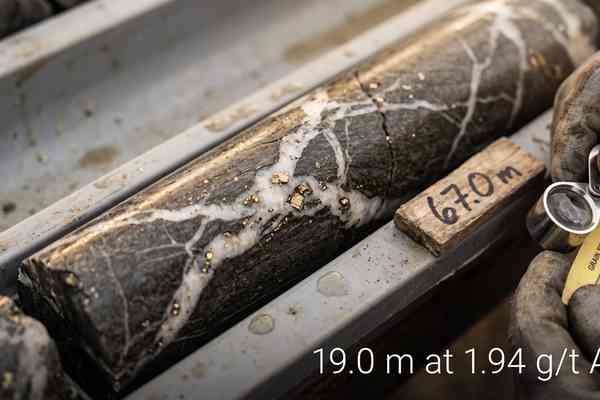
The resource base is impressive for a market capitalization of just under CAD 40 million. Measured and indicated resources of 336,800 ounces, along with inferred resources of 879,900 ounces, total just over 1.2 million ounces of gold. More than 20 discovered gold zones offer further exploration potential.
On the stock market, however, the focus is shifting to the planned production at Barani East. Desert Gold is starting with a gravity concentrator designed to initially process 200 metric tons of ore per day. Technical acceptance testing, including spare parts and a 650-kilovolt-ampere generator, took place in China this spring. Six containers were shipped at the end of April. At the same time, the company cleared approximately 52,000 sqm of land, prepared foundations, and initiated water drilling.
These initial steps are being financed by a capital increase totaling CAD 7.18 million gross, which was completed in February. The funds are earmarked for commissioning as well as drilling in Mali and Côte d'Ivoire.
The PEA for the Barani and Gourbassi projects, at a gold price of USD 2,850 per ounce, has a net present value (NPV) of USD 61 million and an internal rate of return (IRR) of 57%. The study forecasts 113,100 ounces of recoverable gold over ten years, with sustainable total costs of USD 1,137 per ounce. The initial capital requirement is UDS 20.4 million. At a gold price of USD 4,070, the net present value and IRR rose to USD 124 million and 101%, respectively. For comparison: Gold currently trades around USD 4,400 per ounce.
However, this model calculation is not yet a promise of profit. The study is a PEA—that is, a preliminary economic assessment—and also includes inferred resources that are geologically less well-defined. Desert Gold has not yet defined any mineral reserves. The small-scale facility is initially intended to demonstrate how ore, yield, costs, and logistics actually perform during ongoing operations. Only if this practical test is successful will the planned expansion gain credibility.
A reliable update on the timeline is also now necessary. The company had most recently announced a start-up date of July 19, 2026. That date has passed without Desert Gold having reported either a start or a delay. In addition, the results of the 4,250 m drilling program that began in April are still pending. The 46 drill holes across 5 target areas are intended to expand existing resources and identify additional near-surface deposits in the vicinity of Barani.
A successful start-up and positive drilling results could trigger a re-rating. The 297 km² Tiegba Gold project in Côte d'Ivoire, in which Desert Gold can acquire up to a 90% stake, will spread political risk across two countries in the future, but is still in an early phase.
At the most recent share price of CAD 0.11, Desert Gold has a market capitalization of approximately CAD 40 million. The Augsburg-based financial services provider GBC Research sets the price target at CAD 0.93, which represents a premium of 750% compared to the current price. The large discrepancy is based on a sum-of-the-parts valuation and the assumption that production ramp-up will be successful. The potential is enormous, but it is also offset by high construction, metallurgical, and financing risks, as well as the challenging location in Mali.
The bottom line is that Desert Gold remains a speculative gold stock with exceptionally high leverage. The transition from explorer to producer would pave the way for a significantly higher valuation. First, however, the company must prove that the facility is up and running and actually producing gold. For risk-tolerant investors, the stock is an attractive addition to a portfolio.
RWE: Profit Surge with a Fly in the Ointment
The utility company RWE earned significantly more in the first half of 2026. Adjusted EBITDA rose by more than 40% from EUR 2.1 to 3.0 billion, while adjusted net income increased from EUR 0.8 to 1.3 billion. Adjusted earnings per share rose from EUR 1.08 to 1.77. Better wind conditions, new generation capacity, and a recovery in energy trading provided a boost.
Offshore wind increased EBITDA from EUR 643 to 810 million, while onshore wind and solar rose from EUR 830 million to just over EUR 1 billion. Flexible generation grew to EUR 1.03 billion. However, this was aided by a one-time compensation payment of EUR 332 million from the Netherlands.
RWE had already raised its targets at the end of July. For 2026, adjusted EBITDA of 5.75 to EUR 6.35 billion and earnings per share of EUR 2.60 to 3.30 are now expected. By 2031, earnings are expected to rise by an average of 10% per year to EUR 4.55 per share. The dividend is also expected to grow by 10% annually, starting at EUR 1.32 for 2026.
The new majority stake in the power grid operator Amprion adds a stable source of revenue to the business. RWE plans net investments of EUR 9 to 11 billion in 2026 and a total of EUR 42 billion by 2031. Net debt stood at EUR 15 billion at the end of June, while 10.3 gigawatts are currently under construction.
After a share price increase of more than 60% within a year, the stock is no longer a bargain. At around EUR 57.60, the P/E ratio based on the midpoint of the new earnings range is just under 20. In return, investors receive long-term growth and a reliably rising dividend. RWE remains an attractive investment; following its strong run, new purchases are best made during pullbacks.
Allianz: Record Profit—But Is That Enough for New Highs?
Allianz remains a profit machine. In the second quarter, business volume grew organically by 5.7% to EUR 45.6 billion. Operating profit rose by 10.6% to a record EUR 4.87 billion. By contrast, core earnings attributable to shareholders fell by 12.7% to EUR 2.6 billion due to one-time effects.
Adjusted for divestitures and measures related to the separation from the Indian joint ventures, it grew by 10% according to the company. In property and casualty insurance, profit rose by 7.2% to EUR 2.46 billion. The combined ratio deteriorated slightly from 91.2% to 91.9%, but remained at a highly profitable level. The life and health insurance business increased its operating profit by 10% to EUR 1.54 billion.
Asset management, including Pimco and Allianz Global Investors, performed particularly strongly. Profit climbed by 19.8% to EUR 933 million. In the second quarter alone, EUR 39 billion in new client funds flowed in, and assets under management for third parties reached EUR 2.16 trillion. As a result, the fee base continues to grow. After six months, operating profit stands at EUR 9.39 billion, up 8.6% from the previous year. Core earnings per share rose by 17.5% to EUR 16.44, and the annualized return on equity reached 20.7%. The solvency ratio of 225% provides ample leeway. The Executive Board confirmed the full-year target of EUR 17.4 billion in operating profit, plus or minus EUR 1 billion.
Shareholders benefit directly from the strong capital base. The share buyback program totals up to EUR 2.5 billion, of which EUR 1.4 billion had already been executed by mid-year. The most recent dividend of EUR 17.10 corresponds to a yield of just under 4% at a share price of around EUR 437. The P/E ratio hovers around 14, though the share price is only a few percent below its all-time high. Natural disasters, weaker capital markets, and rising claims inflation remain risks. Allianz is therefore less of a high-flying stock and more of a reliable long-term performer with rising dividends and a solid safety net.
Conclusion: Three Risk Categories, Three Opportunities
Desert Gold has the greatest upside potential, but it must first prove it can begin production. With RWE, much has already been priced in following the rally. Allianz delivers record profits, a high return on equity, and reliable dividends, but leaves less room for a revaluation in the short term. Speculative investors are waiting for the next sign of life from Mali, while long-term investors will find more predictable alternatives in RWE and, above all, Allianz.
Conflict of interest
Pursuant to §85 of the German Securities Trading Act (WpHG), we point out that Apaton Finance GmbH as well as partners, authors or employees of Apaton Finance GmbH (hereinafter referred to as "Relevant Persons") may hold shares or other financial instruments of the aforementioned companies in the future or may bet on rising or falling prices and thus a conflict of interest may arise in the future. The Relevant Persons reserve the right to buy or sell shares or other financial instruments of the Company at any time (hereinafter each a "Transaction"). Transactions may, under certain circumstances, influence the respective price of the shares or other financial instruments of the Company.
In addition, Apaton Finance GmbH is active in the context of the preparation and publication of the reporting in paid contractual relationships.
For this reason, there is a concrete conflict of interest.
The above information on existing conflicts of interest applies to all types and forms of publication used by Apaton Finance GmbH for publications on companies.
Risk notice
Apaton Finance GmbH offers editors, agencies and companies the opportunity to publish commentaries, interviews, summaries, news and the like on news.financial. These contents are exclusively for the information of the readers and do not represent any call to action or recommendations, neither explicitly nor implicitly they are to be understood as an assurance of possible price developments. The contents do not replace individual expert investment advice and do not constitute an offer to sell the discussed share(s) or other financial instruments, nor an invitation to buy or sell such.
The content is expressly not a financial analysis, but a journalistic or advertising text. Readers or users who make investment decisions or carry out transactions on the basis of the information provided here do so entirely at their own risk. No contractual relationship is established between Apaton Finance GmbH and its readers or the users of its offers, as our information only refers to the company and not to the investment decision of the reader or user.
The acquisition of financial instruments involves high risks, which can lead to the total loss of the invested capital. The information published by Apaton Finance GmbH and its authors is based on careful research. Nevertheless, no liability is assumed for financial losses or a content-related guarantee for the topicality, correctness, appropriateness and completeness of the content provided here. Please also note our Terms of use.