November 26th, 2026 | 05:35 CET
DroneShield after the crash! Bayer discontinues blockbuster drug in Germany! HPQ Powers SpaceX!
Created and published on behalf of HPQ Silicon
Are DroneShield shares worth a closer look after crashing from AUD 6.71 to just over AUD 1? Analysts' opinions vary widely. What is clear is that growth must accelerate. Bayer's Kerendia generated worldwide revenue of EUR 977 million in the first nine months. Nevertheless, the group is withdrawing the drug from the German market because, in its view, it could not secure an economically viable reimbursement price. HPQ aims to power Starlink Mini for up to 80 hours with a battery case. This gives its lithium-ion cells a new application. The company plans to begin accepting initial reservations in early January 2027. Could the share price take off?
time to read: 5 minutes | Author: Fabian Lorenz
ISIN: HPQ Silicon Inc | CA40444L1031 , BAYER AG NA | DE000BAY0017 , DRONESHIELD LTD | AU000000DRO2 , SPACE EXPLORATION TECHNOLOGIES CORP | US84615Q1031
Table of contents:
Author

Fabian Lorenz
For more than twenty years, the Cologne native has been intensively involved with the stock market, both professionally and privately. He is particularly passionate about national and international small and micro caps.
Tag cloud
Shares cloud
HPQ: Power for Starlink
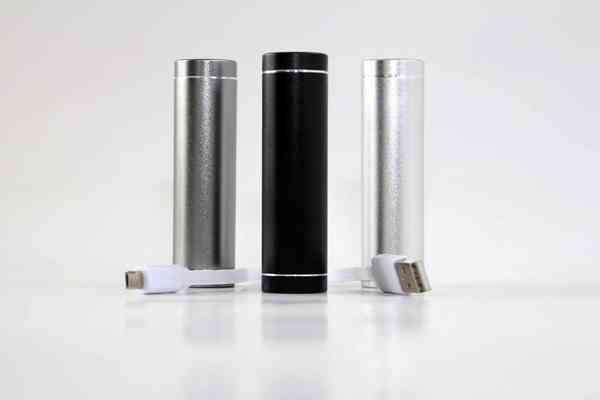
HPQ is making a statement. Last week, the Canadians unveiled the ENDURA+ MiniMax. It is designed to ensure that Starlink Mini never runs out of power. Starlink Mini, from SpaceX, provides satellite internet wherever there is no mobile network coverage, for example at remote construction sites or in motorhomes. The portable device from Elon Musk's company combines an antenna and a Wi-Fi router. A power source is not included. With average consumption of 25 to 40 watts, battery capacity determines how long users can stay online off-grid.
The ENDURA+ MiniMax is housed in a rugged case and contains a battery with 1.95 kWh of storage capacity and a dedicated power connection for the terminal. HPQ estimates a runtime of up to 80 hours. During transport, the satellite antenna also fits inside the case, which weighs around 12 kg.
For HPQ, the MiniMax opens up a new sales channel for the lithium-ion cells developed in collaboration with its French partner Novacium. Each case contains 84 fourth-generation cells, each with a capacity of 6,500 mAh. In developing the product, the partners were able to draw on their experience with battery packs for drones and French military radios. With the finished product, HPQ now aims to target, among others, exploration teams working off-grid for several days at a time. Emergency services and motorhome owners are also among the target customers. HPQ holds a 36.8% stake in Novacium and has exclusive marketing rights in Canada, the US and Mexico for third- and fourth-generation cells, as well as the battery packs made from them.
The planned launch of the battery case could jolt HPQ shares into life. HPQ intends to start accepting reservations with a deposit in early January 2027. The company plans its first commercial deliveries for the end of the first or the beginning of the second quarter of 2027.
DroneShield after the plunge: Analysts divided
Little remains of DroneShield's former status as a stock market darling. In October 2025, investors were still on a buying spree, paying up to AUD 6.71 for shares in the Australian drone defence specialist. Then the plunge below AUD 2 began. The recovery at the beginning of the current year was short-lived. The share price fell sharply from its January high of AUD 4.81 and is currently trading only just above AUD 1. Operationally, things look better than the share price performance suggests. However, DroneShield still has a market capitalisation of around AUD 1 billion. To justify this, growth will have to accelerate.
By mid-October, DroneShield had already generated or contractually secured AUD 261 million in revenue for the current financial year. That was 35% more than at the same point in the previous year. The amount already exceeded actual revenue for the whole of 2025 by 21%. However, the figures were hardly a major surprise. Back in July, management had indicated revenue of AUD 250 to 270 million for 2026.
Analysts have very different views on the development. Jefferies believes DroneShield could exceed the upper end of its full-year guidance. However, they point to the high costs. The analysts therefore maintained their Underperform rating and cut their price target from AUD 1.45 to AUD 1.25. By contrast, Canaccord Genuity is bullish. Its analysts believe DroneShield shares could rise to as much as AUD 2.60.
A framework agreement in the US raises hopes of an acceleration in growth. Through the procurement programme of the US task force JIATF-401, eligible authorities can order directly from DroneShield without having to put each contract out to tender again. The agreement provides for a ceiling of USD 500 million over three years. How much of this reaches DroneShield depends on the individual orders. The company has already received its first orders through the procurement marketplace.
Bayer discontinues blockbuster in Germany
Bayer shares reached their highest level in more than three years in November at around EUR 58. When a US court approved the multibillion-dollar glyphosate settlement last Friday evening, the way seemed clear for further share price gains. But the stock market's delight was short-lived. On Tuesday, the pharmaceuticals division then made headlines. Bayer is withdrawing one of its fastest-growing medicines from the German market.
From December 15, Bayer will discontinue the distribution of Kerendia in Germany. The medicine is used for chronic kidney disease associated with type 2 diabetes and for certain forms of chronic heart failure. The withdrawal was triggered by the assessment of the heart therapy. The Federal Joint Committee found no proven additional benefit over the comparator therapy for this indication. In the subsequent negotiations, Bayer felt that an economically viable reimbursement price could not be achieved. The group is therefore withdrawing Kerendia in Germany for both indications. Global revenue shows how important the medicine has now become for the pharmaceuticals division. In the first nine months of 2026, it rose by 73% to EUR 977 million. Bayer continues to market the medicine outside Germany.
Meanwhile, Bayer has moved closer to a solution to the glyphosate fiasco. Last week, a court in the US state of Missouri approved the class action settlement negotiated in February. It provides for payments of up to USD 7.25 billion over a period of up to 21 years. It covers existing and potential future claims by people who attribute their illness to the weedkiller Roundup. The chapter is not yet fully closed. Appeals can be lodged against the approval.
Conclusion
HPQ looks promising following the positive news of recent weeks. With the battery case for Starlink Mini, the battery technology gains a new application that could bring the share back into investors' focus. For DroneShield, there is no compelling case for buying despite the share price slump. With a market capitalisation of around AUD 1 billion, the share remains ambitiously valued, and sentiment remains poor. The company needs to grow faster and get costs under control. Bayer makes a good impression overall. The court-approved glyphosate settlement makes the financial burden on the group more predictable. However, the withdrawal of Kerendia raises questions.
Conflict of interest
Pursuant to §85 of the German Securities Trading Act (WpHG), we point out that Apaton Finance GmbH as well as partners, authors or employees of Apaton Finance GmbH (hereinafter referred to as "Relevant Persons") may hold shares or other financial instruments of the aforementioned companies in the future or may bet on rising or falling prices and thus a conflict of interest may arise in the future. The Relevant Persons reserve the right to buy or sell shares or other financial instruments of the Company at any time (hereinafter each a "Transaction"). Transactions may, under certain circumstances, influence the respective price of the shares or other financial instruments of the Company.
In addition, Apaton Finance GmbH is active in the context of the preparation and publication of the reporting in paid contractual relationships.
For this reason, there is a concrete conflict of interest.
The above information on existing conflicts of interest applies to all types and forms of publication used by Apaton Finance GmbH for publications on companies.
Risk notice
Apaton Finance GmbH offers editors, agencies and companies the opportunity to publish commentaries, interviews, summaries, news and the like on news.financial. These contents are exclusively for the information of the readers and do not represent any call to action or recommendations, neither explicitly nor implicitly they are to be understood as an assurance of possible price developments. The contents do not replace individual expert investment advice and do not constitute an offer to sell the discussed share(s) or other financial instruments, nor an invitation to buy or sell such.
The content is expressly not a financial analysis, but a journalistic or advertising text. Readers or users who make investment decisions or carry out transactions on the basis of the information provided here do so entirely at their own risk. No contractual relationship is established between Apaton Finance GmbH and its readers or the users of its offers, as our information only refers to the company and not to the investment decision of the reader or user.
The acquisition of financial instruments involves high risks, which can lead to the total loss of the invested capital. The information published by Apaton Finance GmbH and its authors is based on careful research. Nevertheless, no liability is assumed for financial losses or a content-related guarantee for the topicality, correctness, appropriateness and completeness of the content provided here. Please also note our Terms of use.